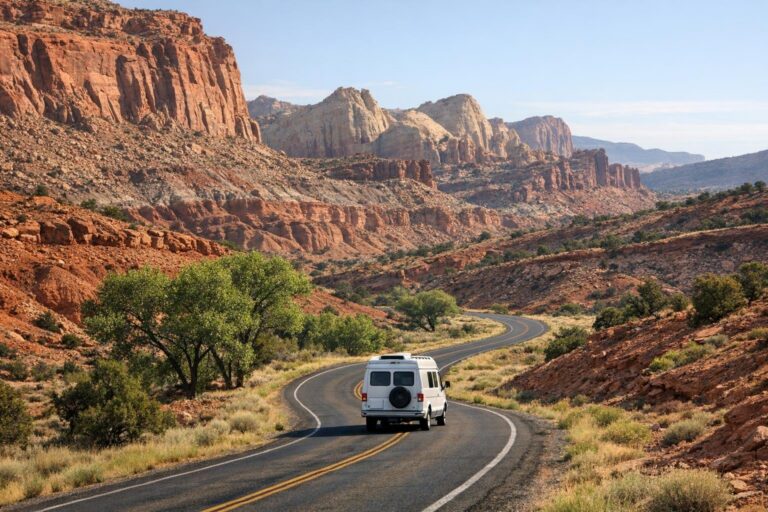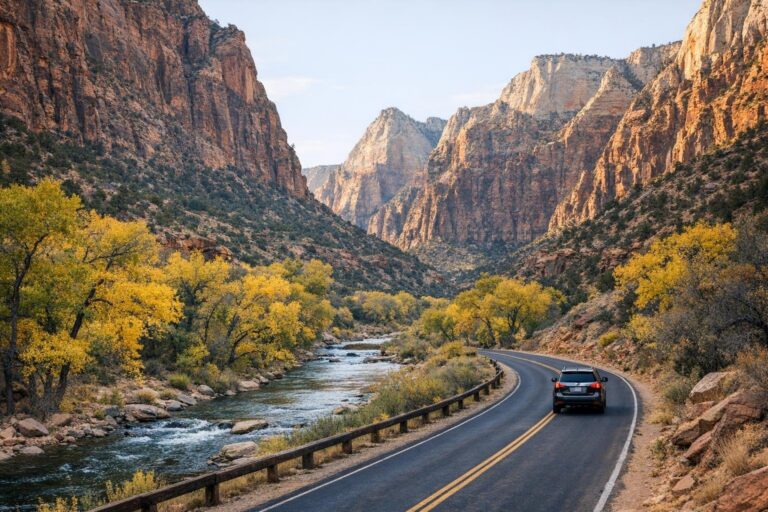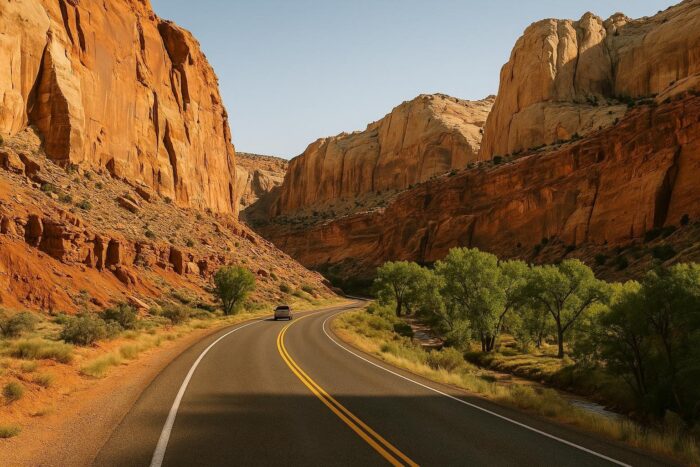
Southern Utah has five national parks within a day’s drive of one another: Zion, Bryce Canyon, Capitol Reef, Canyonlands and Arches. The state’s tourism office markets them together as “The Mighty 5,” and linking them by car is one of the classic road trips in the American West, with red rock canyons, high plateaus and some of the best scenic byways in the country.
This guide follows the most common route, from southwest to northeast: Las Vegas to Zion, then Bryce Canyon, Scenic Byway 12 to Capitol Reef, and Moab for Arches and Canyonlands, finishing in Salt Lake City or looping back. Distances are approximate and vary slightly between sources.
Utah Mighty 5 road trip at a glance
| Leg | Approximate distance | Suggested time |
|---|---|---|
| Las Vegas to Zion | About 160 miles | 2 days in Zion |
| Zion to Bryce Canyon | About 85 miles | 1 to 2 days |
| Bryce Canyon to Capitol Reef, via Scenic Byway 12 | About 120 to 140 miles | 1 day |
| Capitol Reef to Moab | About 150 miles | 3 days for Arches and Canyonlands |
| Moab to Salt Lake City | About 235 miles | Half a day |
Seven days is a workable minimum. Ten days lets you hike in each park without rushing, and Visit Utah’s own 10-day itinerary, which adds Monument Valley and Goblin Valley, covers about 1,040 miles.
Zion National Park
Zion is about 160 miles from Las Vegas, roughly two and a half hours, which makes it the natural first stop. The main canyon is reached by the Zion Canyon Scenic Drive. From March through November, and for a short holiday period in late December, the drive is served by a free shuttle, and private cars are not allowed on it except for Zion Lodge guests. No reservation is needed for the shuttle.
The most famous hike, Angels Landing, requires a permit for the final chain section beyond Scout Lookout. Permits are issued by lottery on Recreation.gov, either seasonally or the day before. Without one, the Riverside Walk and the lower sections of the Narrows are good alternatives. Summer is hot in the canyon, with 100°F days common, so start hikes early.
A 2026 change matters if you travel in a large RV: since June 7, 2026, vehicles over set size limits (roughly 35 feet 9 inches long, 7 feet 10 inches wide or 11 feet 4 inches tall) are banned from the Zion-Mount Carmel Highway between Canyon Junction and the East Entrance, and the old tunnel escort service has ended. Large vehicles must take roads around the park to reach Bryce Canyon, which adds 10 to 40 minutes.
Bryce Canyon National Park
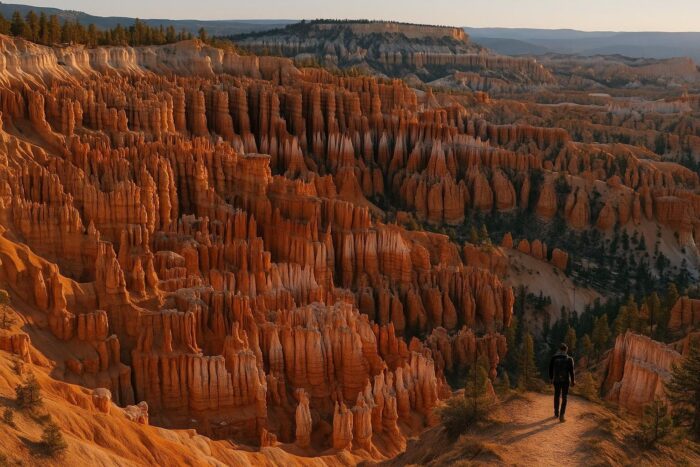
Bryce Canyon is about 85 miles from Zion, under two hours by the park’s east side. It is not really a canyon but a series of natural amphitheaters filled with hoodoos, and it sits high: most of the park is between 8,000 and more than 9,000 feet, so take it easy on the trails the first day. Nights drop below freezing from October to May, and snow is common in winter.
Sunrise and sunset from the rim viewpoints, such as Sunrise Point and Sunset Point, are the highlights, and a walk down among the hoodoos on the Navajo Loop or Queen’s Garden trail gives you the park from below. In 2026, the optional free shuttle runs from April 3 to October 18.
Scenic Byway 12 and Capitol Reef
From Bryce, Scenic Byway 12 runs about 124 miles to Torrey, the gateway to Capitol Reef. It is one of America’s All-American Roads, climbs to about 9,600 feet on Boulder Mountain and crosses Grand Staircase-Escalante National Monument through the towns of Escalante and Boulder. Allow a full day: the stretch known as the Hogback, with drop-offs on both sides, is best driven slowly and in daylight.
Capitol Reef is the quietest of the five parks. Its historic Fruita district has about 2,000 fruit trees planted by early settlers; you can pick fruit in season where signs allow it, paying at the self-pay stations. The Gifford House sells small pies from mid-March to late November. The paved Scenic Drive runs about 7.9 miles and dead-ends, so you return the same way; its dirt spurs into Grand Wash and Capitol Gorge make easy short hikes.
Arches and Canyonlands from Moab
From Capitol Reef, the road runs east through the desert to Moab, about 150 miles away. Moab is the base for the last two parks, and three nights there is a good plan.
Arches National Park is only about 5 miles north of Moab. The park did not use timed-entry reservations in 2026, but it can turn cars away at the entrance when it is congested, so arrive early. The classic hike to Delicate Arch is 3 miles round trip with about 480 feet of climbing, in full sun; go at sunrise or late afternoon and carry water. Ranger-led and permit hikes in the Fiery Furnace still require a reservation.
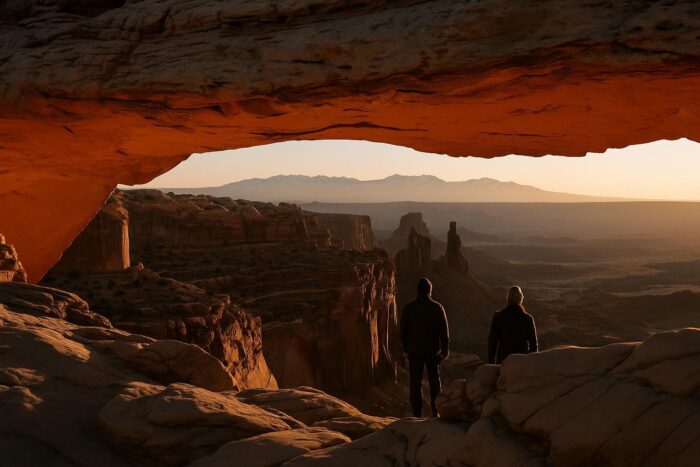
Canyonlands is divided into districts that are not connected by road inside the park. Island in the Sky, about 32 miles from Moab, is the easiest to visit, with overlooks and the short walk to Mesa Arch, a 0.6-mile round trip that is popular at sunrise. The Needles district is about 75 miles from Moab by a different road, and the Maze requires a high-clearance four-wheel-drive vehicle. Next to Island in the Sky, Dead Horse Point State Park has one of the best viewpoints over the Colorado River.
Planning tips for the Mighty 5
- Best seasons: spring (March to early May) and fall (September to October). Summer is very hot in Moab and Zion, and winter brings snow to Bryce and the high passes.
- Fuel and services: fill up at every town. Around Canyonlands, the National Park Service warns that food, fuel and medical help can be more than 50 miles away.
- Water: carry at least a gallon per person per day in the desert parks, more if you hike.
- Park passes and 2026 fees: an America the Beautiful annual pass covers all five parks. Since January 1, 2026, visitors who are not US residents pay an extra per-person fee at Zion and Bryce Canyon unless they hold the nonresident annual pass.
- Lodging: book early in Springdale, Bryce, Torrey and Moab for spring and fall.
For help turning this into a day-by-day plan, see our step-by-step road trip planning guide. If you want to compare Utah with other regions, our guide to the best scenic road trips in the USA covers the main routes.
Utah Mighty 5 FAQ
How many days do you need for the Mighty 5?
Seven days is a realistic minimum to see all five parks. Ten days gives you time for longer hikes and a rest day.
What is the best order to visit Utah’s national parks?
From Las Vegas, go Zion, Bryce Canyon, Capitol Reef, then Arches and Canyonlands from Moab. From Salt Lake City, drive the same route in reverse.
Do you need reservations for Utah’s national parks in 2026?
Not for park entry at Zion or Arches, but you need a permit for Angels Landing and a reservation for the Fiery Furnace. Check each park’s website before you go.
Can you drive an RV through Zion?
Only within the size limits. Since June 2026, large RVs and long trailers cannot use the Zion-Mount Carmel Highway and must detour around the park.