Knowing how to plan a road trip comes down to a handful of decisions made in the right order: where you want to drive, how many days you really have, what you can spend, which car you will use and what the weather will be doing along the way. Get those five right and the rest (motels, playlists, snacks) falls into place.
This guide walks through each step for a road trip in the United States, from the first idea to the night before departure. It is written for first-timers, but it also covers the details that catch experienced drivers out, such as seasonal road closures, park entry rules that changed in 2026 and the hidden costs of a rental car.
Step 1: Choose your route before anything else
The route shapes every other decision. A coastal drive, a loop through desert national parks and a slow ride along a mountain parkway call for different seasons, budgets and cars. Start with what you want to see, not with a list of cities.
A few questions help narrow the field:
- Landscape: ocean cliffs, red rock canyons, forests, small towns or big cities?
- Shape: a loop that brings you back to your starting point, or a one-way drive between two airports?
- Pace: a few long driving days with big sights, or short hops with time to hike and linger?
- Season: when can you actually travel, and is the route good at that time of year?
If you have no route in mind yet, start with the classics. Our selection of scenic road trips USA goes route by route, from Route 66 to the Pacific Coast Highway, with the best season and the time each one needs. Pick two or three candidates, then test them against the next steps.
Step 2: Decide how long the trip will be
Most planning mistakes come from underestimating driving time. A map app gives you the time behind the wheel, not the time a day really takes once you add fuel stops, meals, viewpoints and the inevitable wrong turn. A practical approach is to cap the pure driving time at around four to five hours on most days, and to keep at least one day in three with little or no driving.
Some reference points help set expectations:
- The Highway 1 route between San Francisco and Los Angeles is roughly 480 miles, and the Big Sur stretch is slow, with traffic often moving at 30 to 40 mph.
- A loop from Las Vegas through Zion, Bryce Canyon, Page and the Grand Canyon’s South Rim covers a little over 800 miles.
- The Blue Ridge Parkway runs 469 miles with a maximum speed limit of 45 mph, lower on the twisty sections.
Scenic roads are slow roads. That is the point of them, so plan your days around it.
Step 3: Build a realistic road trip budget
A road trip budget has five main lines. Estimate each one separately rather than guessing a daily total.
| Budget line | How to estimate it | Ways to save |
|---|---|---|
| Fuel | Total miles divided by your car’s highway mpg, multiplied by the local price per gallon | Refuel in towns rather than at isolated stations near parks |
| Lodging | Number of nights times a nightly rate for the area and season | Stay just outside national parks or resort towns |
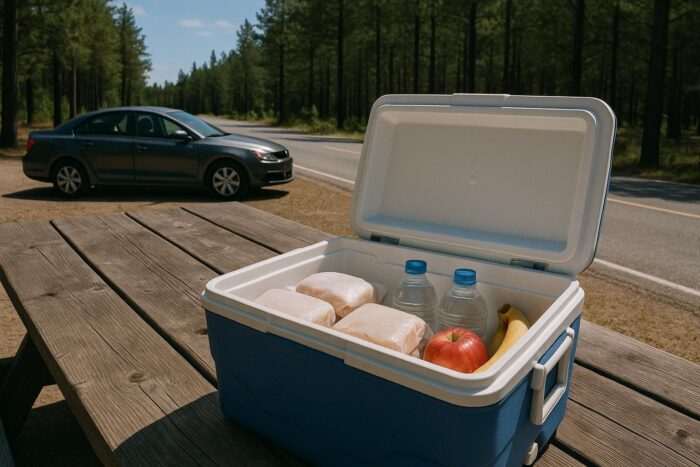
| Food | Meals out per day plus groceries | Pack a cooler for lunches and snacks |
| Car | Rental rate plus taxes, fees, insurance and any one-way fee | Compare airport and off-airport pickup, avoid one-way if possible |
| Parks and activities | Entrance fees, tours, parking | An annual pass if you visit several fee-charging parks |
For national parks, check the 2026 rules before you set the budget. Since January 1, 2026, the America the Beautiful annual pass costs $80 for U.S. residents and $250 for nonresidents. Nonresidents without an annual pass also pay a $100 per person fee at 11 of the most visited national parks, on top of the standard entrance fee. International visitors planning a multi-park loop should run the numbers both ways.
Step 4: Map your stops and book the key nights
Once the route and the number of days are fixed, divide the drive into daily segments and choose where you will sleep each night. Put the stops on a single map so you can see the whole trip at once. Everyday navigation apps limit the number of stops per route, so longer trips are easier to build in a dedicated planner or split into several legs.
Book first the nights that are hard to replace: lodging inside or right next to popular national parks, small coastal towns in summer and anything on a holiday weekend. Leave some nights flexible if your route allows it, especially in regions where motels are plentiful.
Also check park entry rules. They change from year to year. For 2026, Arches and Yosemite dropped their vehicle reservation requirements, while Rocky Mountain National Park kept timed entry during its peak months, from late May through mid-October. Look up each park on nps.gov a few weeks before you go.
Step 5: Choose the right car
Your own car is usually the cheapest option if it is reliable and the route starts near home. Have it serviced before a long trip: tires, brakes, fluids, battery and a spare that actually holds air.
If you rent, look beyond the daily rate:
- One-way fees: dropping the car in another city can add a significant charge. A loop avoids it.
- Driver age: most rental companies set a minimum age and charge young drivers extra, usually under 25. Check the rules in your pickup state before you book.
- Insurance: check what your own auto policy and your credit card already cover before accepting the counter options.
- Tolls: rental toll programs often add a daily fee, so check how tolls work on your route.
Size matters too. A compact car is fine for paved scenic roads. A higher-clearance vehicle only makes sense if you plan to use gravel roads, and many rental contracts restrict unpaved driving anyway.
Step 6: Plan around the weather and the seasons
Weather decides whether some routes are open at all. Several of the country’s most spectacular high roads close every winter:
- Tioga Road in Yosemite typically opens in late May or June and closes in November.
- Trail Ridge Road in Rocky Mountain National Park is usually open from the end of May through October.
- Beartooth Highway between Montana and Wyoming usually closes in the first half of October and reopens in late May or early June.
On the coasts, the Atlantic hurricane season runs from June 1 to November 30, with most activity between mid-August and mid-October. Big Sur is periodically closed by landslides, most often in winter and spring; Highway 1 fully reopened through Big Sur on January 14, 2026, after the long closure at Regent’s Slide. On the Blue Ridge Parkway, some North Carolina sections were still being repaired in 2026 after Hurricane Helene, so check the park’s closure page before committing to the full length.
A week before departure, start watching the forecast for each overnight stop, then check it daily along the route itself.

Step 7: Prepare for the road
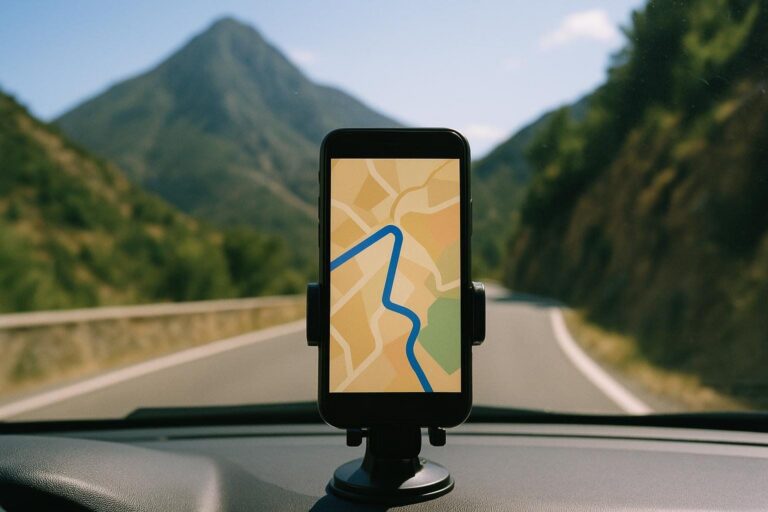
Scenic routes often cross areas with no cell coverage, which is exactly when you need your map. Before leaving:
- Download offline maps for the whole route in your navigation app.
- Carry a paper road atlas or state maps as a backup.
- Pack water, snacks, a first aid kit, a flashlight, a phone charger and warm layers, even in summer at altitude.
- Save the numbers of your rental company’s roadside assistance or your own roadside plan.
- Share your itinerary with someone at home, with the nights and addresses.
- Note the 511 road information service for the states you cross: it reports closures, construction and winter conditions.
A simple planning timeline
| When | What to do |
|---|---|
| 3 to 6 months before | Choose the route and dates, book park lodging and peak-season nights |
| 1 to 3 months before | Book the car, fill the remaining nights, check park entry rules |
| 2 weeks before | Service your car, list daily segments, download offline maps |
| 1 week before | Watch forecasts and road conditions, confirm reservations |
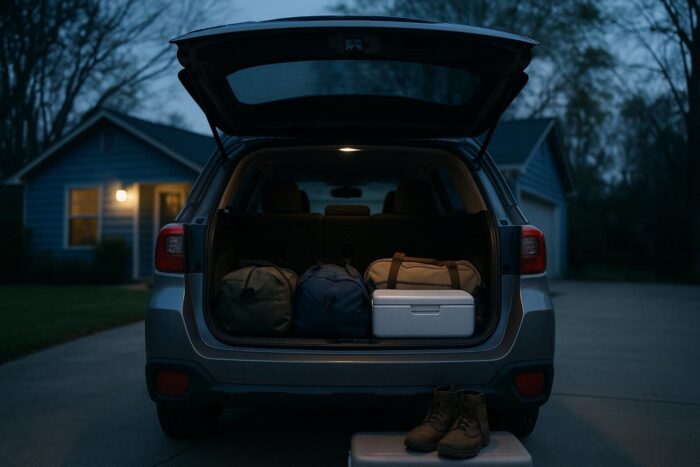
| Day before | Pack the car, check the first day’s weather and closures |
FAQ about planning a road trip
How far in advance should I plan a road trip in the USA?
For summer trips that include popular national parks, three to six months ahead gives you the best choice of lodging. A shoulder-season trip through areas with plenty of motels can be planned a few weeks out.
How many miles a day is comfortable on a road trip?
It depends on the road more than the distance. On scenic routes, keep pure driving time to about four or five hours a day so you still have time to stop, walk and enjoy the views.
Is a loop or a one-way road trip better?
A loop is usually cheaper with a rental car because it avoids one-way fees. A one-way trip covers more new ground and suits routes like the Pacific Coast Highway, where backtracking wastes time.
What is the most common road trip planning mistake?
Packing too much driving into too few days. Build in rest days and buffer time, and you will see more even if you cover fewer miles.