Oklahoma is the heart of Route 66. The state’s tourism office claims more than 400 drivable miles of the old highway, the longest drivable stretch of any state, and you can follow most of it without ever getting on the interstate. It also has the densest cluster of Route 66 museums and a city park named after the road.
This guide runs east to west, from the Kansas line to Texas, with the stops that matter: the Blue Whale of Catoosa, Tulsa, Arcadia, Route 66 Park in Oklahoma City and the museums in Clinton and Elk City.
Route 66 Oklahoma at a glance
| Section | Highlights | Suggested time |
|---|---|---|
| Kansas line to Tulsa | Miami’s Coleman Theatre and nine-foot roadbed, Vinita, the Blue Whale | Half a day |
| Tulsa | 11th Street Bridge, Cyrus Avery Centennial Plaza, Route 66 Rising | Half a day to a night |
| Tulsa to Oklahoma City | Sapulpa, Stroud, Chandler, Arcadia | Most of a day |
| Oklahoma City to Texas | Route 66 Park, Hydro, Clinton, Elk City, Erick | A full day |
Northeast Oklahoma: Quapaw to Catoosa
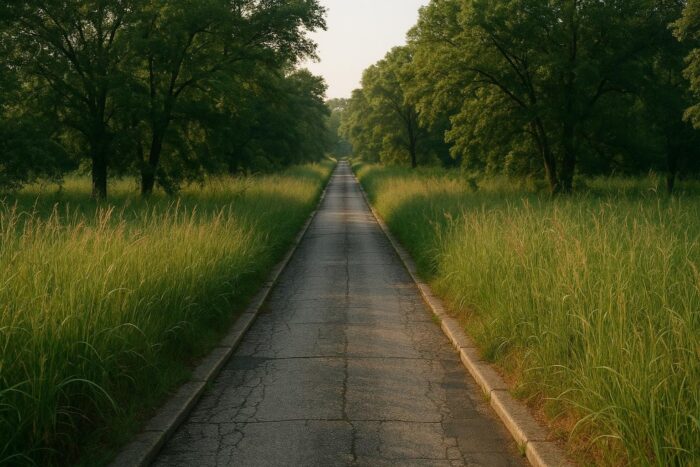
Route 66 enters from Kansas near Quapaw, then runs through Commerce and into Miami. Downtown Miami’s Coleman Theatre dates from 1929, and near town a section of the original nine-foot-wide roadbed, often called the Ribbon Road, is listed on the National Register of Historic Places. It shows how narrow the first paved highways were.
Afton and Vinita follow, then Catoosa and its Blue Whale, a smiling concrete whale sitting in a pond by the road. It is one of the most photographed Route 66 attractions in the state and a mandatory stop if you travel with kids.
Route 66 in Tulsa
Tulsa matters to the road’s history because Cyrus Avery, a Tulsa highway official, championed the creation of Route 66. The Cyrus Avery Centennial Plaza, by the historic 11th Street Bridge (a 1916 concrete arch bridge on the National Register), features a large sculpture called “East Meets West.” At the city’s former eastern approach, the Route 66 Rising sculpture, about 70 feet by 30 feet, greets drivers. The Tulsa segment has 29 historical markers along roughly 26 miles, so it rewards a slow drive.
Tulsa is also one of the host cities for the Route 66 Centennial: the highway was designated on November 11, 1926, and a birthday celebration and Veterans Day events are planned there in November 2026. Book early if you plan to be in town then.
Tulsa to Oklahoma City: Sapulpa, Stroud and Arcadia
Southwest of Tulsa, the old road is at its most rural and relaxed. Sapulpa has the Heart of Route 66 Auto Museum, opened in 2016. Stroud’s Rock Café, built of sandstone in 1939, is a classic lunch stop. In Chandler, the Route 66 Interpretive Center occupies a 1935 armory built by the WPA.
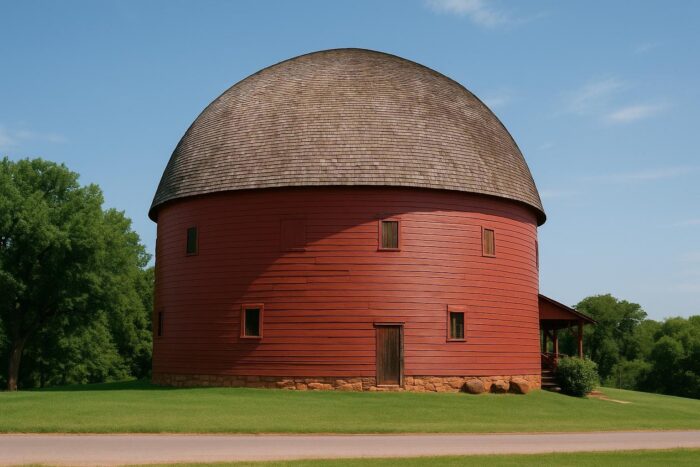
Arcadia gives you two icons in one stop: the Round Barn, standing since 1898, and POPS, a restaurant and soda shop marked by a 66-foot neon soda bottle. Stop at dusk if you want to see the bottle lit up.
Route 66 Park in Oklahoma City
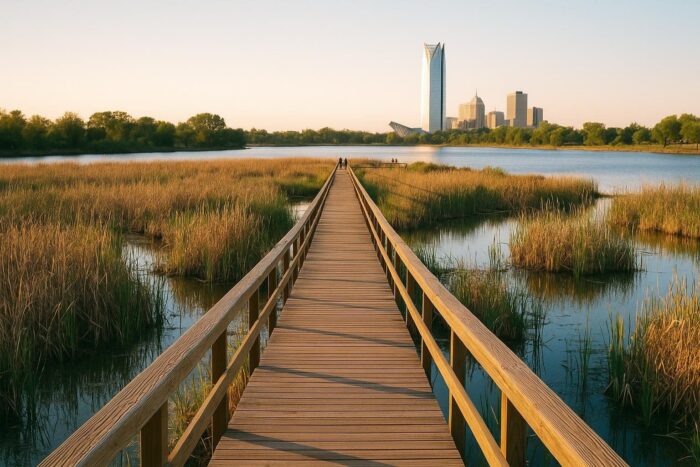
People searching for a Route 66 park in Oklahoma usually mean this one. Route 66 Park sits on the shore of Lake Overholser, on the west side of Oklahoma City, and covers 148 acres. It has three ponds with wetland boardwalks, about a mile of walking trails, the Cyrus Avery Observation Tower, and Route 66 Plaza, with an oversized map of the highway’s eight states from Illinois to California. There is also a large playground, a skate court, an amphitheater and a picnic shelter. Entry is free.
The lake itself is part of the story. From 1926 to 1958, Route 66 ran along its north shore; a 1958 project moved the highway about a quarter mile north, and the original 1926 section survives as North Overholser Drive. It makes a good leg-stretching break before the long run west.
Western Oklahoma: Route 66 museums and small towns
West of Oklahoma City, the road passes Yukon and El Reno, then Hydro, where Lucille Hamons ran her service station from 1941 to 2000 and earned the nickname “Mother of the Mother Road.” Stretches of the original concrete paving from the early 1930s survive in this part of the state.
Clinton has the Oklahoma Route 66 Museum, run by the Oklahoma Historical Society, with exhibits organized by era, from the Dust Bowl to a 1950s diner. From February through October it opens Monday to Saturday, 9 a.m. to 5 p.m.; check the museum for current admission. A short drive west, Elk City’s National Route 66 Museum covers all eight states and has an interactive ride in a 1959 Cadillac. Past Sayre, with its old timber bridge over the North Fork of the Red River, come Erick and Texola, the last towns before Texas.
How to plan Route 66 in Oklahoma
Two days is the sweet spot: day one from the Kansas line to Tulsa or Arcadia, day two from Oklahoma City to the Texas border. A third day lets you slow down in Tulsa and do both museums in the west. Oklahoma sits near the middle of the drive, so it shapes the rest of your schedule; our day-by-day plan for the whole highway shows how the states fit together. For other drives worth a week of your time, browse America’s best scenic road trips by region.
Spring and fall are the most comfortable seasons. Spring is also storm season on the plains, so keep an eye on the forecast.
Route 66 Oklahoma FAQ
How many miles of Route 66 are in Oklahoma?
Oklahoma’s tourism office cites more than 400 drivable miles, the most of any Route 66 state. Official highway lengths vary by alignment.
Where is Route 66 Park in Oklahoma?
On the shore of Lake Overholser in west Oklahoma City. It is free and has trails, boardwalks, an observation tower and a giant Route 66 map.
Where is the Route 66 museum in Oklahoma?
The state’s main one is in Clinton, off I-40 at exit 65. Elk City and Chandler have their own.
Can I drive Route 66 in Oklahoma without the interstate?
Almost entirely. Oklahoma has kept more of the old road drivable than any other state.