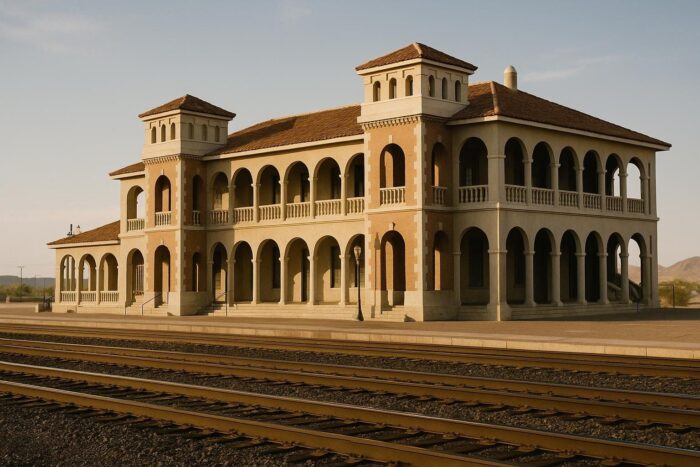
The Route 66 Mother Road Museum sits inside Barstow’s Harvey House, a 1911 railroad depot and hotel at 681 North First Avenue. It shows vintage cars and Route 66 artifacts, admission is free, and the current hours are short: 11 a.m. to 2 p.m. Monday through Saturday, noon to 3 p.m. on Sunday.
That short window is the main thing to plan around. Barstow is the last real town before the long desert run east toward Needles, and the first big stop for drivers heading west from Arizona, so the museum is easy to reach. Here is what you will find inside, a bit of history about the building, and how to combine it with the rest of the California stretch.
What you see at the Route 66 Mother Road Museum
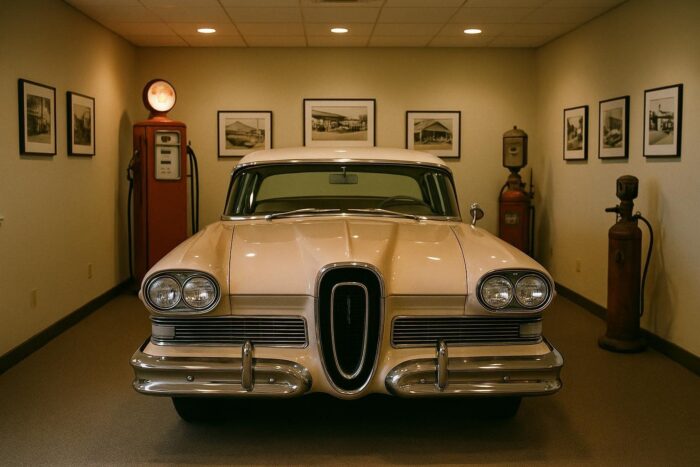
The museum is small, and that is part of its charm. Its exhibits focus on how Route 66 grew and how it changed travel in the United States, told through objects rather than long text panels. The cars are the headline:
- a 1958 Edsel, one of Ford’s best-known flops and now a collector favorite;
- a 1923 Model T Doctor’s Coupe;
- a 1929 Ford Model A.
Around them you will find Route 66 signs, roadside artifacts and photos of the desert towns along the old road. Most visitors spend between thirty minutes and an hour here. If you like cars and old highway signage, it is an easy stop; if you want a deep, decade-by-decade history of the whole highway, the state museum in Clinton, Oklahoma, goes further.
Casa del Desierto: the Barstow Harvey House
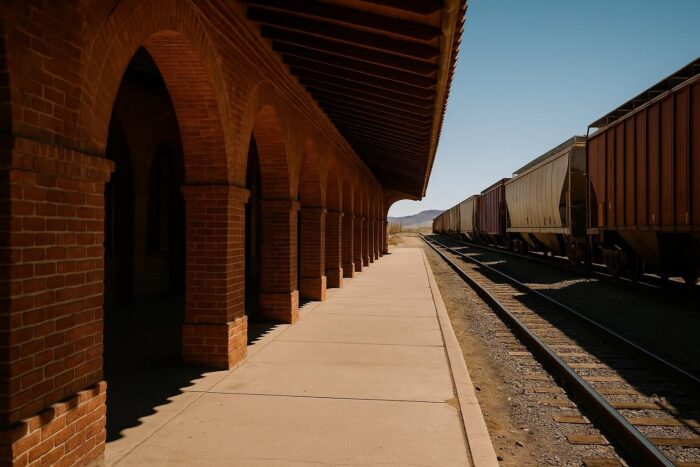
The building is reason enough to stop. Casa del Desierto opened in 1911 as a Santa Fe Railway station and Fred Harvey hotel, replacing an earlier depot that burned in 1908. Architect Francis W. Wilson mixed Spanish Renaissance and Classical Revival styles with a Moorish feel: red brick, arcaded colonnades that throw shade on the platforms, barrel tile roofs and towers topped with domes.
The Santa Fe closed the station in 1973, and the building sat empty until the City of Barstow bought it in 1990. The 1992 Landers earthquake damaged it badly, and more than $8 million in repairs followed. It was added to the National Register of Historic Places in 1975 and named a California Historical Landmark in 1976. In the 1950s it was also listed in the Green Book, the guide for African American travelers.
Today the Harvey House holds several tenants besides the Route 66 museum: the Western America Railroad Museum, a passenger train station, city offices and the Barstow visitor center. Give yourself time to walk the colonnades and look at the trains that still roll past.
A museum that closed and came back
The Barstow Route 66 museum first opened in 2000. It closed in June 2024 after water damage, and a small group of investors and Route 66 historians brought it back. It reopened on March 22, 2025, with a ribbon-cutting ceremony, just in time for the run-up to the highway’s 100th anniversary. Route 66 was designated on November 11, 1926, and 2026 centennial events are taking place in all eight states, so expect more visitors than usual this year.
Practical info for your visit
| Item | Details |
|---|---|
| Address | 681 N. First Avenue, Barstow, CA 92311 (inside the Harvey House) |
| Hours | Mon to Sat 11 a.m. to 2 p.m.; Sun noon to 3 p.m. |
| Admission | Free, donations and gift shop purchases welcome |
| Phone | 760-998-1992 |
| Time needed | 30 to 60 minutes, more with the railroad museum |
Hours at small, volunteer-supported museums can change, and older listings still show longer hours. Call before you drive in, especially on a holiday.
Fitting Barstow into your California leg
Barstow sits where the desert stretch of Route 66 meets the road to Los Angeles, so it works as a lunch stop in either direction. Heading west, a sensible order is:
- Barstow: Harvey House, the Route 66 Mother Road Museum and the railroad museum, timed for the midday opening.
- Oro Grande and Victorville: follow the old road along the Mojave River to the California Route 66 Museum in Victorville, which is free and open until 4 p.m. most days.
- Cajon Pass and San Bernardino: drop out of the high desert toward the Los Angeles basin.
Heading east, reverse it and plan the desert section toward Amboy and Needles carefully: services are sparse, summer heat is serious, and parts of the National Trails Highway have been closed on and off for bridge repairs. San Bernardino County lists current closures on its public works site.
If you are still sketching the full itinerary, start with the complete Chicago to Santa Monica itinerary, which lays out the daily legs and where California fits. For other long drives that pair well with the Mojave, see our roundup of America’s most beautiful driving routes.
Route 66 Mother Road Museum FAQ
Is the Route 66 Mother Road Museum in Barstow open?
Yes. It reopened on March 22, 2025, after closing in June 2024, and currently opens daily with short midday hours.
How much does the Barstow Route 66 museum cost?
Admission is free. Donations and gift shop purchases help keep it running.
Where is the museum inside the Harvey House?
It is part of Casa del Desierto at 681 N. First Avenue, the same complex as the Western America Railroad Museum and the train station.
Is it worth stopping if I also visit Victorville?
Yes. The two are complementary: Barstow has the cars and the historic depot, Victorville focuses on the westernmost stretch and local history.