Illinois is where Route 66 begins. The old highway leaves downtown Chicago and runs for about 300 miles across the prairie to the Mississippi River at St. Louis. The Illinois section was designated a National Scenic Byway in 2005, and it is signed well enough to follow with a paper map.
This guide runs from east to west, the direction most people drive the road: the Begin sign in Chicago, Joliet, the Gemini Giant in Wilmington, the old gas stations of Dwight and Odell, Pontiac, Springfield, Litchfield and the Chain of Rocks Bridge.
Route 66 Illinois at a glance
| Section | Highlights | Suggested time |
|---|---|---|
| Chicago to Joliet | Begin sign on Adams Street, Lou Mitchell’s, Rialto Square Theatre | Half a day |
| Joliet to Pontiac | Gemini Giant, Polk-a-Dot Drive In, Ambler’s Texaco, Odell station | Half a day |
| Pontiac to Springfield | Route 66 Hall of Fame and Museum, Atlanta, Funks Grove, McLean | Most of a day |
| Springfield to the Mississippi | Cozy Dog, Lincoln sites, Ariston Cafe, Soulsby station, Chain of Rocks Bridge | A full day |
Chicago: where the Mother Road begins
The Begin Route 66 sign stands on East Adams Street, just west of Michigan Avenue, facing westbound traffic. Its twin, the End sign, is one block south on Jackson Boulevard for drivers coming the other way. The road first started at Jackson and Michigan in 1926; Adams took over as the westbound start after Jackson became a one-way street in the 1950s. For the full story of both ends of the highway, see where Route 66 starts and ends.
Before leaving the city, many drivers stop at Lou Mitchell’s on West Jackson Boulevard. The restaurant was founded in 1923 and calls itself the first stop on the Mother Road. Plan to leave Chicago early: the first miles through the suburbs are slow, with traffic lights and a few turns that are easy to miss.
Joliet, Wilmington and the Gemini Giant
Joliet is the first real Route 66 town. The Joliet Area Historical Museum on North Ottawa Street houses a Route 66 Welcome Center and a permanent Route 66 exhibit, and the Rialto Square Theatre nearby opened in May 1926, a few months before the highway got its number. The Rialto is listed on the National Register of Historic Places.
A short drive south, Wilmington is home to the Gemini Giant, a fiberglass astronaut that stood for decades outside the Launching Pad restaurant. The restaurant has closed, and in November 2024 the statue was reinstalled at the entrance of South Island Park in Wilmington, where an agreement keeps it until 2045. A small seasonal souvenir shop opened nearby in 2025. If an older guide sends you to the restaurant, go to the park instead.
Braidwood follows, with the Polk-a-Dot Drive In, in business since 1956 and known for its statues of Elvis, Marilyn Monroe, James Dean and the Blues Brothers.
Dwight, Odell and Pontiac
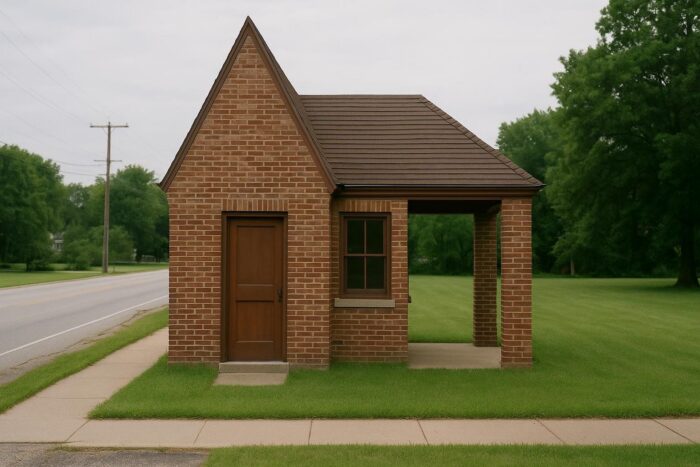
This stretch has two of the best restored gas stations on the whole route. Ambler’s Texaco in Dwight was built in 1933, sold fuel until 1999 and, after its restoration, became the town’s Route 66 visitor center. In Odell, the 1932 Standard Oil station is listed on the National Register and has been carefully restored with period details.
Pontiac deserves an hour or two. The Illinois Route 66 Hall of Fame and Museum, opened in 2004, displays the Volkswagen van of artist Bob Waldmire, the model for the character Fillmore in the movie Cars, along with the school bus he lived in. The town is also known for its outdoor murals, many painted in 2009, including a large Route 66 shield that is a favorite photo stop. A centennial plaza opened behind the museum in 2026.
Central Illinois: Atlanta, Funks Grove and McLean
South of Bloomington, the old road runs beside I-55 through small farm towns. Atlanta has Tall Paul, a giant fiberglass figure holding a hot dog. He first stood outside a hot dog stand in Cicero in the 1960s and moved to Atlanta in 2003 after the stand closed.
Funks Grove, near Shirley, has sold maple sirup (the family’s traditional spelling) since the 1800s. The sap runs in late winter, and sales continue until the year’s stock runs out, often by late summer, so do not count on it in the fall. In McLean, the Dixie Truckers Home, founded in 1928, is now the Dixie Travel Plaza and still serves drivers.
Route 66 in Springfield
Springfield, the state capital, is the natural overnight stop in Illinois. The Cozy Dog Drive In on South Sixth Street is still run by the Waldmire family; Ed Waldmire first sold his batter-dipped hot dog on a stick in 1946, and the restaurant claims it as the original corn dog of this kind. Sources differ on the year the current drive-in opened, but the family connection to the road is not in doubt.
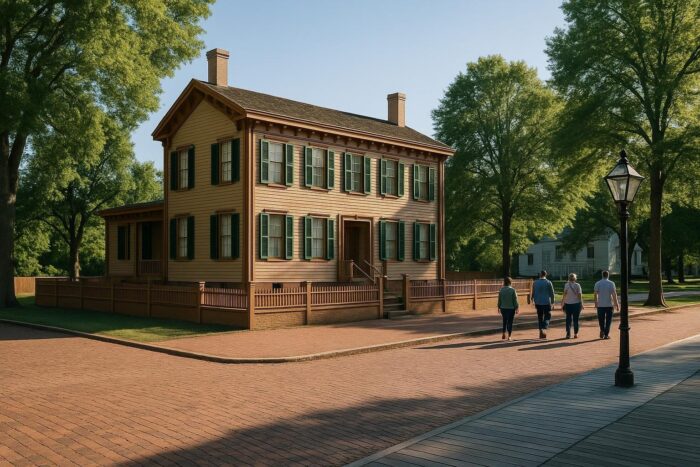
The city is also Abraham Lincoln’s hometown. Lincoln Home National Historic Site preserves the only house the Lincolns ever owned, inside a four-block historic neighborhood, and the Abraham Lincoln Presidential Library and Museum opened in 2005. Both fit easily into a morning before you drive on.
Springfield hosts the International Route 66 Mother Road Festival each September, and the state’s Red Carpet Corridor Festival runs in the towns between Joliet and Bloomington in early May. Check dates before you book, as hotels fill up.
Litchfield, Mount Olive and the Chain of Rocks Bridge
South of Springfield, Litchfield has the Ariston Cafe, founded in 1924 in nearby Carlinville and in its current building since 1935. It is widely described as one of the oldest restaurants on Route 66, and it is on the National Register. Nearby on the same road, the Litchfield Museum and Route 66 Welcome Center has exhibits on local history and the highway.
In Mount Olive, the Soulsby Service Station was built in 1926 and sold only Shell gas for decades. Farther south, Henry’s Rabbit Ranch in Staunton closed to visitors in 2025 after the death of its owner; new owners have announced plans to reopen it, so check its status before you go.
The last Route 66 landmark in Illinois is the Old Chain of Rocks Bridge over the Mississippi. It is about a mile long, with a 22-degree bend in the middle, and it has been open only to walkers and cyclists since 1999. Park at the Illinois end and walk out to the bend; cars cross the river on the interstate bridges nearby.
How many days for Route 66 in Illinois?
Two days is a comfortable pace: day one from Chicago to Pontiac or Springfield, day two from Springfield to the Mississippi. A third day gives you time for the Lincoln sites and the Pontiac museum without rushing. Because Illinois is the first state of a westbound trip, it sets the rhythm for the rest; our complete Route 66 itinerary shows how the eight states fit together, and the Route 66 museum guide lists the other museums along the way.
Late spring and early fall are the most pleasant seasons, with the added benefit of the May and September festivals. Some small attractions are seasonal and close in winter.
Route 66 Illinois FAQ
How many miles of Route 66 are in Illinois?
About 300 miles, from downtown Chicago to the Mississippi River. Sources differ slightly depending on the alignment they follow.
Where does Route 66 start in Illinois?
On East Adams Street near Michigan Avenue in downtown Chicago, where the Begin sign faces westbound traffic.
Where is the Gemini Giant now?
At the entrance of South Island Park in Wilmington, where it was moved in 2024 after the Launching Pad restaurant closed.
Can you drive across the Chain of Rocks Bridge?
No. It has been open only to pedestrians and cyclists since 1999. Cars use the interstate bridges to reach St. Louis.