An Italy road trip lets you see three very different countries in one: the jagged peaks of the Dolomites, the vineyards and hill towns of Tuscany, and the cliffside villages of the Amalfi Coast. Distances are short compared with a US trip, but the roads are narrower and the rules are different, so a little planning goes a long way.
Below is a 12-day Italy road trip itinerary from Venice to the Amalfi Coast, with approximate distances for each leg, followed by the driving rules that matter most for American travelers.
Italy road trip itinerary at a glance
| Days | Leg | Approx. distance | Highlights |
|---|---|---|---|
| 1 to 2 | Venice to Cortina d’Ampezzo | About 155 km (97 miles) | Pick up the car on the mainland, climb into the mountains |
| 3 to 4 | Great Dolomites Road, Cortina to Bolzano | About 110 km (68 miles) | Falzarego and Pordoi passes |
| 5 | Bolzano to Florence | About 375 km (231 miles) | Transfer day on the autostrada |
| 6 to 7 | Florence to Siena via the SR222 | About 75 km (47 miles) | Chianti wine villages |
| 8 to 9 | Siena to the Val d’Orcia | About 70 km (43 miles) to Pienza | Pienza, Montalcino, Montepulciano |
| 10 | Val d’Orcia to Naples area | About 385 km (239 miles) | Transfer day |
| 11 to 12 | Amalfi Coast | About 58 km (36 miles) from Naples to Positano | SS163 coastal road |
Stage 1: the Dolomites
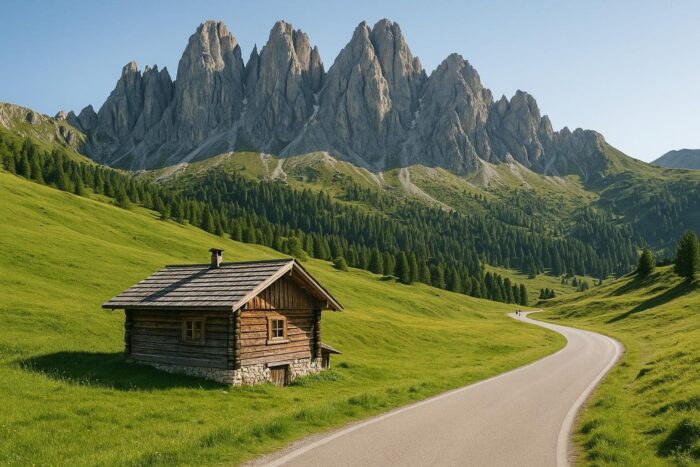
Start in Venice, but pick up your rental car on the mainland, since the historic city has no roads. From there, it is about 155 km to Cortina d’Ampezzo. The centerpiece of this section is the Great Dolomites Road, a 110-km route between Cortina and Bolzano that crosses the Falzarego Pass and the Pordoi Pass, which tops out at 2,239 meters. Allow a full day with stops at viewpoints and mountain huts.
The high passes are best from early summer to early fall. Outside that window, snow can make conditions difficult, so check road status before you go.
Stage 2: Tuscany
From Bolzano, a long autostrada day takes you south to Florence. Park outside the center and explore on foot or by public transit. Then take the SR222, the “Chiantigiana,” which winds from Florence to Siena through Chianti Classico wine country, passing towns like Greve and Castellina.
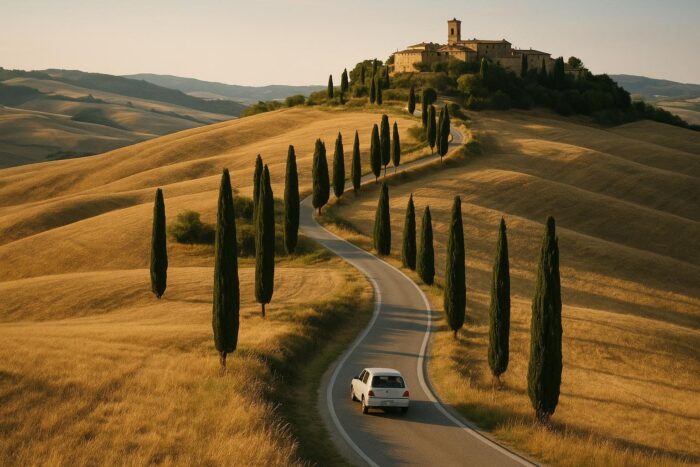
After Siena, continue into the Val d’Orcia, a UNESCO World Heritage Site known for cypress-lined roads and rolling hills. A good loop heads to San Quirico d’Orcia, then along the SP146 to Pienza and Montepulciano. Add Montalcino if you have time. Sunset is the classic hour for photos.
Stage 3: the Amalfi Coast
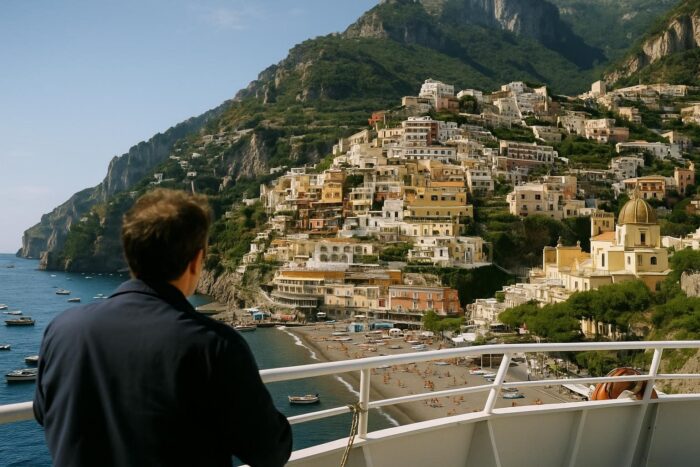
The SS163 along the Amalfi Coast is one of the most beautiful roads in Europe, and one of the most stressful. It is narrow, busy with buses and scooters, and parking in villages like Positano and Amalfi is scarce and expensive.
On set dates in 2026, an alternating license plate rule applies on the SS163 from 10 a.m. to 6 p.m.: depending on the date, only cars whose plate ends in an odd or an even digit may drive, and motorbikes and residents are exempt. The spring 2026 windows were March 30 to April 6 and April 24 to May 2. Check the current calendar before you drive. Many travelers return the car in Naples or Salerno and use ferries or local buses along the coast instead.
Driving rules for an Italy road trip
- International Driving Permit. US drivers should carry an IDP along with their US license. Without it, you risk a fine if you are stopped. In the US, only two automobile associations are authorized by the State Department to issue it.
- ZTL zones. Most historic centers are “zona a traffico limitato” areas enforced by cameras. You will not be stopped; the fine arrives by mail, often months later and with an extra fee from your rental company. Look for the ZTL signs and park outside.
- Tolls. Italy’s autostrade are toll roads. On most sections, you take a ticket on entry and pay on exit.
- Car size. Choose the smallest car that fits your group. Village streets and parking spaces are tight.
If Italy is one option among several, our guide to the best road trip routes in Europe compares it with Iceland, Ireland, Scotland, Austria and Spain. And if you have driven in the US, you will notice the contrast with America’s most famous scenic highways: fewer miles per day, but far more to see per mile.
Best time for a road trip in Italy
Late spring and early fall are ideal: the Dolomite passes are usually open by early summer, Tuscany is green in May and golden in September, and the Amalfi Coast is less crowded than in July and August. Summer works but brings heat, traffic and full hotels. Winter suits a Tuscany-only trip, but mountain passes can be closed or snowy.
Italy road trip FAQ
How many days do you need for an Italy road trip?
About 12 days covers the Dolomites, Tuscany and the Amalfi Coast at a comfortable pace. With a week, focus on one or two regions, such as Tuscany alone.
Is it hard to drive in Italy as an American?
Highways are straightforward. The challenges are narrow roads, ZTL zones in historic centers and parking. Study the ZTL rules and choose a small car.
Do I need an International Driving Permit for Italy?
Yes, US drivers should carry one with their license. Get it before you leave from one of the two US automobile associations authorized to issue it.
Should I drive the Amalfi Coast?
Only if you are confident on narrow, busy roads and have checked the plate restriction dates. Many visitors prefer ferries and buses for this section.