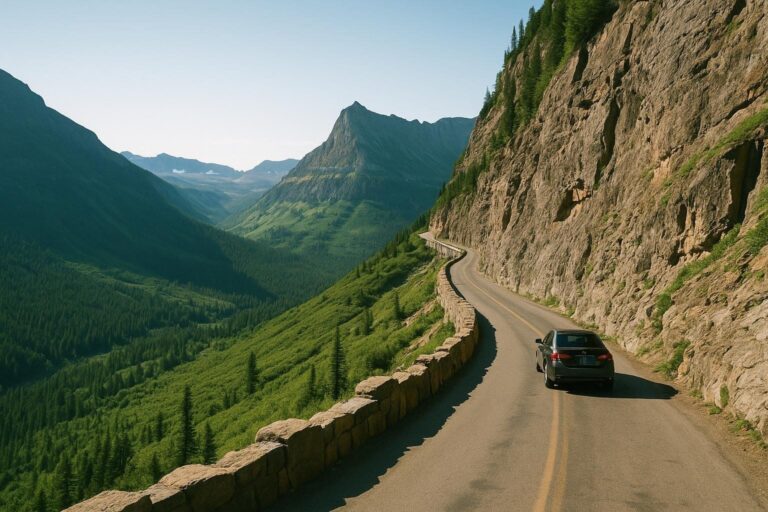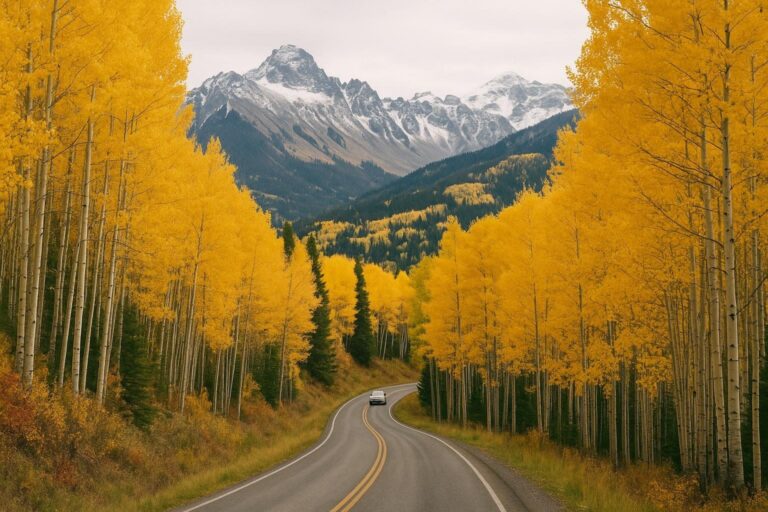
If you have already driven the Pacific Coast Highway or Route 66, Europe offers something different: shorter distances, narrower roads and a new country, language or mountain range every few hours. The best road trip routes in Europe pack a lot of variety into a small space, which suits travelers who want scenery and culture on the same day.
This guide picks eight routes that stand out, compares them with the American drives you may know, and covers the rules that catch US drivers off guard, from Italy’s restricted traffic zones to Alpine toll vignettes.
Europe vs. the USA: what changes behind the wheel
American road trips are about distance: long days, wide roads, big skies. European ones are about density. Here is how the experience differs in practice.
| Topic | USA | Europe |
|---|---|---|
| Daily distances | Often 300 miles or more | Often under 150 miles on scenic days |
| Roads | Wide lanes, big shoulders | Narrow village streets, tight mountain switchbacks |
| Rental cars | Automatic by default | Manual is common; automatics may cost more |
| Tolls | Varies by state | Toll booths in Italy and Spain, vignettes in Switzerland and Austria |
| City centers | Generally open to cars | Many are restricted or camera-enforced |
| Driving side | Right | Right, except the UK and Ireland |
If you are used to the great American road trips, expect to cover fewer miles per day and to spend more time out of the car. A two-hour drive in Tuscany can easily fill a whole day.
The best road trip routes in Europe
1. Iceland’s Ring Road
Route 1 loops around the whole island for about 1,322 km (821 miles), past waterfalls, glaciers, black-sand beaches and fjords. It is the closest thing in Europe to the wide-open feel of the American West. Summer brings long daylight and easier conditions; winter driving demands experience and flexibility.
2. The North Coast 500, Scotland
The NC500 is a 516-mile loop around the north of Scotland that starts and ends at Inverness Castle. Expect single-track roads with passing places, mountain passes and empty beaches. Remember that Scotland drives on the left.
3. The Wild Atlantic Way, Ireland
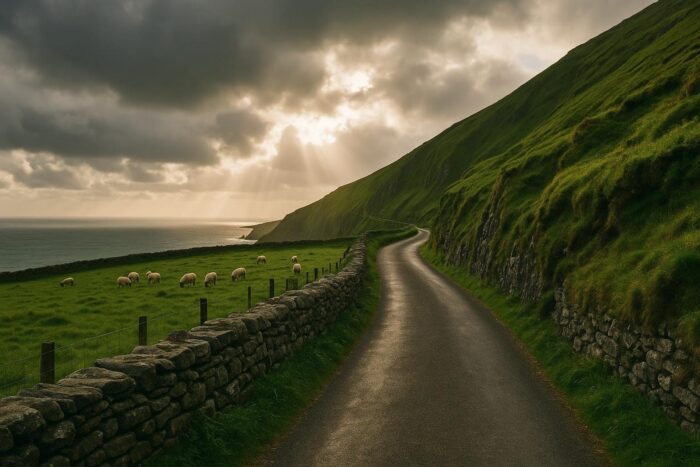
About 2,600 km (1,600 miles) long, the Wild Atlantic Way follows Ireland’s west coast from the Inishowen Peninsula in the north to Kinsale in County Cork. Nobody drives it all in one go: pick a region, such as Kerry or Connemara, and give it several days. Ireland also drives on the left.
4. The Atlantic Ocean Road, Norway
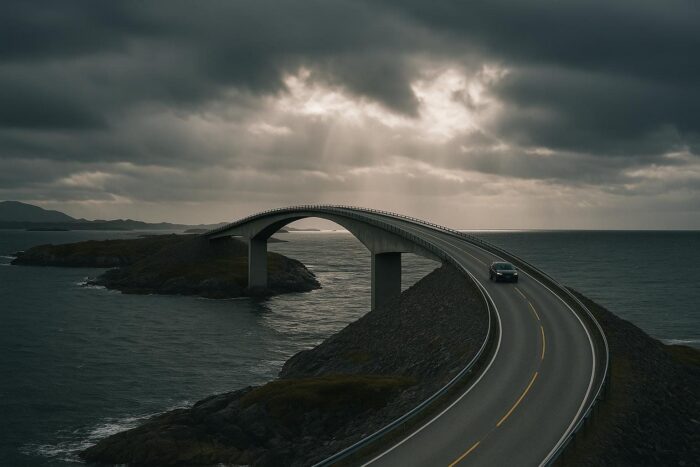
Short but spectacular, the Atlantic Ocean Road is an 8.3-km (5.2-mile) section of County Road 64 that hops across small islands on a series of bridges. Build a western Norway road trip around it, combining fjords and mountain roads.
5. The Great Dolomites Road, Italy
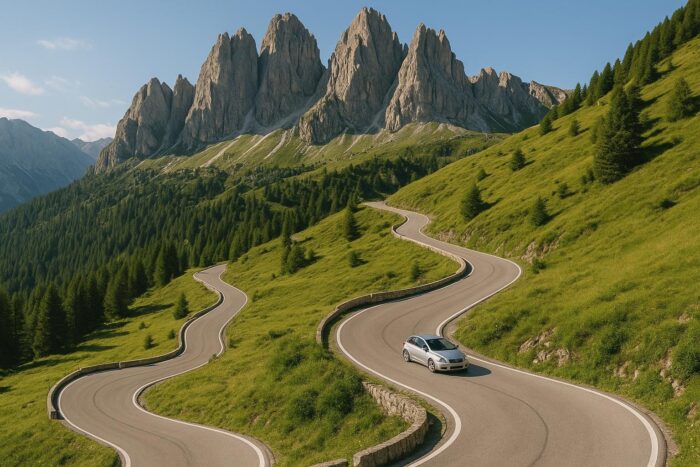
This 110-km (68-mile) road links Bolzano to Cortina d’Ampezzo over the Pordoi Pass, the high point at 2,239 meters, and the Falzarego Pass. It is a pure mountain drive, with jagged limestone peaks on every side. Summer and early fall are the best times.
6. Grossglockner High Alpine Road, Austria
A toll road over the Alps that climbs toward Austria’s highest peak. It closes in winter: in 2026 it opened fully on April 25 and is scheduled to stay open until November 2. It fits neatly into a loop through Austria and the Italian Dolomites.
7. Tuscany and the Amalfi Coast, Italy
Italy combines two classics. In Tuscany, the SR222 “Chiantigiana” winds from Florence to Siena through Chianti wine country, and the Val d’Orcia, a UNESCO World Heritage Site, is famous for its cypress-lined hills. Farther south, the SS163 clings to the cliffs of the Amalfi Coast, with some of the most dramatic, and most crowded, driving in Europe.
8. Andalusia’s white villages, Spain
The Ruta de los Pueblos Blancos in southern Spain covers roughly 235 km through whitewashed hill towns like Arcos de la Frontera, Grazalema and Zahara de la Sierra, with Ronda and its gorge-spanning bridge as a highlight. Spring and fall avoid the intense summer heat.
Driving rules Americans should know
- International Driving Permit. Italy and Spain expect US drivers to carry an IDP along with their US license. In the US, only two automobile associations are authorized by the State Department to issue it, so get one before you leave.
- Italy’s ZTL zones. Many Italian historic centers are limited traffic zones enforced by cameras. There is no police stop: the fine arrives by mail weeks or months later, often through your rental company. Park outside and walk in.
- Vignettes. Switzerland requires a motorway vignette, which costs CHF 40 and is sold as a sticker or an e-vignette; there are no short-term versions. Austria sells digital vignettes, including a 10-day option at €12.80 in 2026. Buy them before you drive on the motorway.
- Spain’s low emission zones. Spanish cities with more than 50,000 residents are required to have low emission zones, and Madrid and Barcelona enforce them with cameras. Check the rules before driving into a large city.
- Amalfi Coast plate restrictions. On set dates in 2026, the SS163 applies alternating license plate rules from 10 a.m. to 6 p.m., based on whether the last digit of the plate is odd or even. Check the calendar before you plan that day.
How to choose your first European road trip
Match the route to what you enjoy most back home:
- If you love the national parks of the West: Iceland’s Ring Road or the NC500 give you big landscapes and few towns.
- If you enjoy the Pacific Coast Highway: try the Wild Atlantic Way or the Amalfi Coast, though the latter is far narrower and busier.
- If mountain passes like the Beartooth Highway are your thing: the Dolomites and the Grossglockner are the answer.
- If you want food, towns and history every hour: Tuscany or Andalusia.
Keep your first trip simple: one country, one region, fewer hotel changes. Avoid one-way rentals across borders, which can carry steep drop-off fees, and pick the smallest car your group can live with. Narrow roads and tight parking make a compact car a real asset.
Practical planning checklist
A few steps done at home save a lot of stress on the road.
- Get your IDP before you fly. It cannot be issued once you are in Europe.
- Read the rental terms on cross-border travel. Some companies restrict which countries you can drive into or charge a fee for it.
- Check insurance coverage. Your US auto policy or credit card may not cover rentals abroad in the same way it does at home.
- Plan parking, not just driving. In old towns, the hard part is finding a legal place to leave the car. Look up garages or lots at the edge of each center.
- Download offline maps. Coverage can drop in mountains and remote coastal areas, from the Highlands to the Dolomites.
- Keep scenic days short. Two to three hours of actual driving is plenty on mountain or coastal roads, where the stops are the point.
Finally, learn the local road signs. Most follow the same international conventions, but restricted zones, speed cameras and parking rules are signposted in the local language. A quick look before the trip makes the first day on the road far less stressful.
Europe road trip FAQ
What is the best road trip route in Europe for a first-timer?
Tuscany is a friendly start: moderate distances, good roads outside the towns and plenty to see. Just learn how the ZTL zones work before you arrive.
Do I need an International Driving Permit to drive in Europe?
For Italy and Spain, US drivers should carry one along with their license. Get it in the US before your trip, through one of the two automobile associations authorized to issue it.
Are automatic rental cars available in Europe?
Yes, but manual cars are common in rental fleets, and automatics can be more expensive or scarce. Reserve one early if you need it.
When is the best time for a European road trip?
Late spring and early fall offer the best balance of weather and crowds. High mountain roads like the Grossglockner are closed in winter.