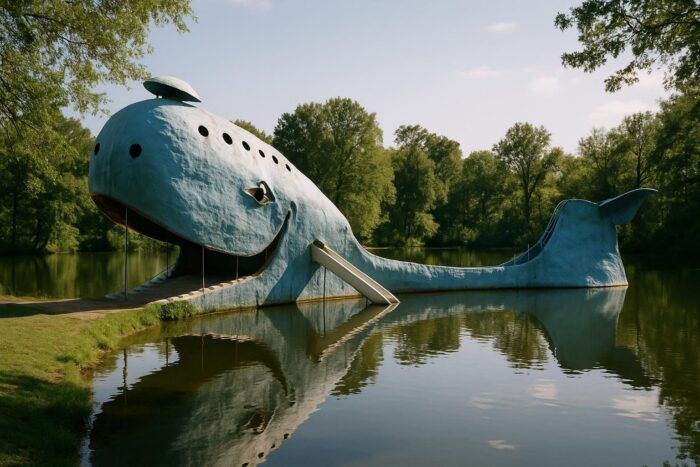
The Blue Whale of Catoosa is an 80-foot concrete whale with a wide grin, sitting in a pond beside Route 66 in northeastern Oklahoma, between Tulsa and Claremore. It started as a private anniversary present in the early 1970s and became one of the most photographed stops on the entire road.
Visiting is free, and in May 2026, the road’s centennial year, a new visitor center opened on the site. Here is the story behind the blue whale, what you can do there today and how to plan the stop into your Route 66 itinerary.
The story of the Blue Whale of Catoosa
The whale was built by Hugh Davis, a local zoologist, with the help of his friend Harold Thomas. Davis’s wife Zelta collected whale figurines, so he decided to give her a much bigger one: the whale was his surprise gift for their 34th wedding anniversary in 1972.
It took about two years to build. The frame is steel pipe and rod, covered in concrete. According to the Davis family’s account, Hugh spent thousands of hours applying cement that he mixed by hand, one bucket at a time.
From family pond to Route 66 swimming hole
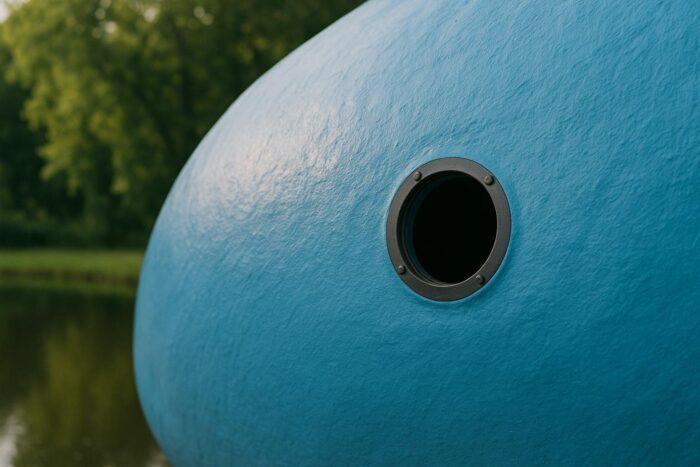
The spring-fed pond was originally meant for the family. Locals soon started showing up, so the Davises added sand, picnic tables and lifeguards, and the property grew into an attraction called Nature’s Acres. Kids climbed through the whale’s open mouth, peered out of portholes in its head, rode the slides built in place of its fins down into the water and jumped from a platform on its tail. Next door, the family also ran a small animal and reptile exhibit, the A.R.K.
The pond closed to swimmers in 1988.
Decline and restoration
After Hugh Davis died in 1990, the whale slowly fell into disrepair. Local residents, together with employees of a nearby hotel, organized a restoration, and in 1997 the whale was repainted in its original bright blue. Swimming has not returned, but the whale became a stop again for travelers exploring the old road.
The City of Catoosa bought the property in 2020, and on May 30, 2026, it celebrated the grand opening of the Blue Whale Visitor Center with a fun run, a ribbon cutting, live music and fireworks.
Visiting the Blue Whale today
| Practical info | Details |
|---|---|
| Location | On Route 66 in Catoosa, Oklahoma, northeast of Tulsa |
| Admission | Free |
| Swimming | Not allowed |
| Visitor center | Opened May 2026: Route 66 gift shop, historical exhibits, restrooms and concessions |
| Hours | Daytime, varying by day of the week; check the City of Catoosa before you go |
| Time needed | 30 to 60 minutes |
You can walk around the pond, step inside the whale’s head and take the classic photo from the bank with the whale’s smile in full view. The pond and the grounds around it make a pleasant place to stretch your legs after a long morning behind the wheel.
A few tips help you get more out of the stop:
- Go early or late in the day. Midday is busier, especially in 2026, and the low light flatters the blue paint.
- Check hours for the visitor center. The grounds and the center may not share the same schedule, and hours can change with the season.
- Respect the structure. The whale is a restored, hand-built landmark. Stay off areas that are fenced or signed.
How to fit the Blue Whale into your Route 66 itinerary
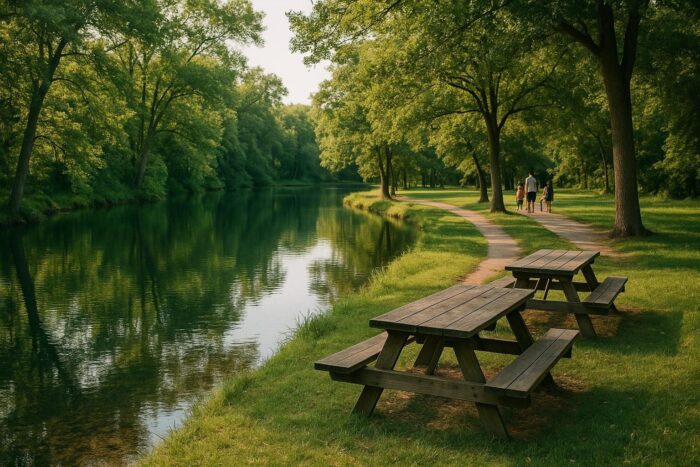
Catoosa sits on one of the most enjoyable stretches of the road in Oklahoma. Westbound travelers coming from Missouri and the short Kansas section reach it after Miami and Vinita, then continue a short way to Tulsa. That makes the whale an easy late-afternoon stop before a night in Tulsa, or a first stop of the day if you slept in Claremore.
From Tulsa, the old two-lane road continues toward Oklahoma City through Sapulpa, Stroud, with its 1939 Rock Cafe, and Arcadia, home of Pops 66. Together they make a relaxed day on the original alignment.
The whale is only one of dozens of quirky stops along the road. See our full list of Route 66 attractions, organized state by state, to plan the rest of the drive, from the Gemini Giant in Illinois to Cadillac Ranch in Texas.
Why the Blue Whale matters to Route 66
Most early roadside attractions were built to sell something: gas, food, a motel room. The Blue Whale was built out of affection, for a family and then for a community that used it as its summer swimming hole. That story, plus a very photogenic grin, explains why it survived when so many other stops did not.
It also reflects how the whole road has been saved. Much of what you see on Route 66 today exists because local people restored it, painted it and kept it open. If you like that kind of place, the Blue Whale belongs on a list with America’s most memorable drives and stops.
Blue Whale of Catoosa FAQ
Can you swim at the Blue Whale of Catoosa?
No. Swimming ended in 1988 and is not allowed today.
How much does it cost to visit the Blue Whale?
Nothing. Admission to the site is free.
How far is the Blue Whale from Tulsa?
Catoosa is a short drive northeast of Tulsa on Route 66, so the whale fits easily into a Tulsa overnight.
Who built the Blue Whale on Route 66?
Hugh Davis, with his friend Harold Thomas, as an anniversary gift for his wife Zelta in 1972.