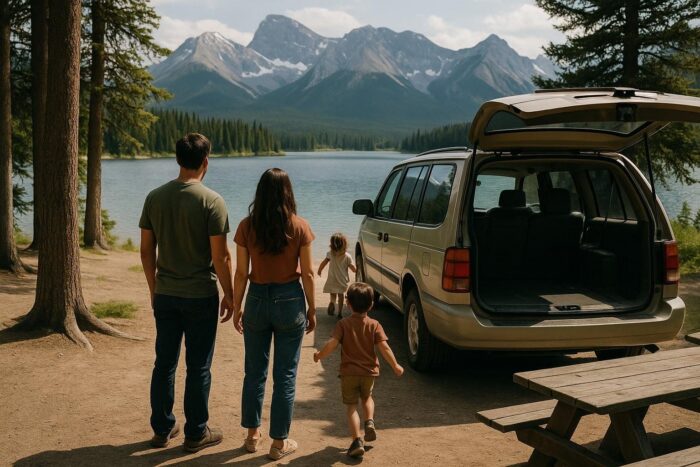
Good road trip ideas for kids are less about the route and more about rhythm. Children cope well with a long trip when each day has a clear reward: a beach, a geyser, a giant roadside dinosaur, a pool at the motel. They cope badly with eight hours of highway and a promise that the view will be worth it.
This guide gives you family road trip ideas across the US that deliver frequent payoffs, a simple pacing rule, and practical tips for keeping the back seat calm.
What makes a good family road trip
Before choosing a destination, check three things:
- Short legs. Stops that are two hours apart at most.
- Hands-on stops. Places where kids can climb, splash or touch something, not just look.
- Easy logistics. Reliable food, restrooms and lodging along the way, so you are not improvising with a tired toddler.
Routes that fail these tests, like remote desert byways with long gaps between gas stations, are better saved for when the kids are older.
Road trip ideas for kids, by destination type
National parks with Junior Ranger programs
Most national parks run a free Junior Ranger program: kids complete an activity booklet, attend a ranger talk or walk a trail, then earn a badge. It turns every park into a mission. A few family favorites:
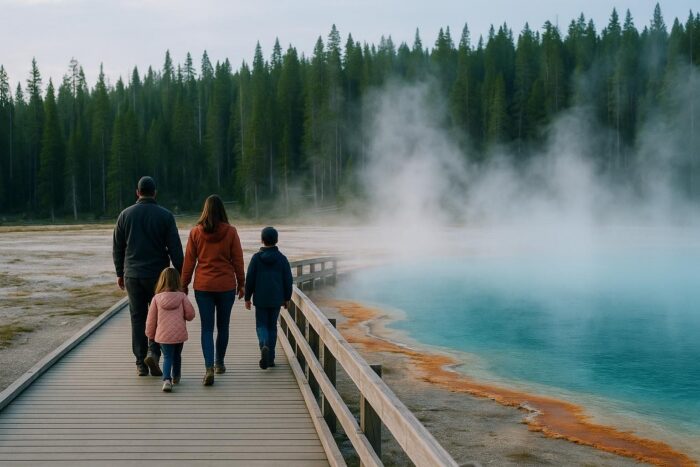
- Yellowstone: geysers, hot springs and wildlife viewing from the car, with boardwalks around the main thermal areas.
- Acadia: the 27-mile Park Loop Road on Mount Desert Island, Maine, with tide pools, short trails and plenty of pull-offs.
- Mount Rushmore and Badlands: two very different landscapes in western South Dakota, close enough to combine in one trip.
Beaches and lakes
Water fixes most moods. The Gulf Coast, the Oregon coast along US 101 and the shores of Lake Michigan all offer beach stops you can string together with short drives. Indiana Dunes National Park, about 50 miles from downtown Chicago, is an easy first family trip for Midwest families.
Roadside attractions
Route 66 is basically a string of oddities that kids love: giant statues, vintage gas stations, neon signs and quirky museums. You do not need to drive all of it. A few days on one section, in Oklahoma or Arizona for example, gives you plenty of photo stops without long driving days.
For more options by region and season, browse more road trip ideas, then come back here to fit the route to your family’s pace.
How many hours can kids handle in the car?
There is no universal number, and every child is different. A practical rule many families use: stop at least every two hours, and keep total scenic-day driving to about four or five hours. Save longer stretches for interstate transfer days, and plan them around naps or early starts.
| Age | Pacing that usually works | What helps |
|---|---|---|
| Babies and toddlers | Short legs timed around naps | Early starts, long breaks at playgrounds |
| Ages 4 to 8 | Two hours, then a stop | Games, audiobooks, a snack bag they control |
| Ages 9 and up | Longer legs are possible | Letting them help navigate or choose a stop |
Three family road trip ideas to copy
- Great Lakes weekend from Chicago: Indiana Dunes on day one, then up the Michigan shore for beaches and small towns. Short drives, lots of sand.
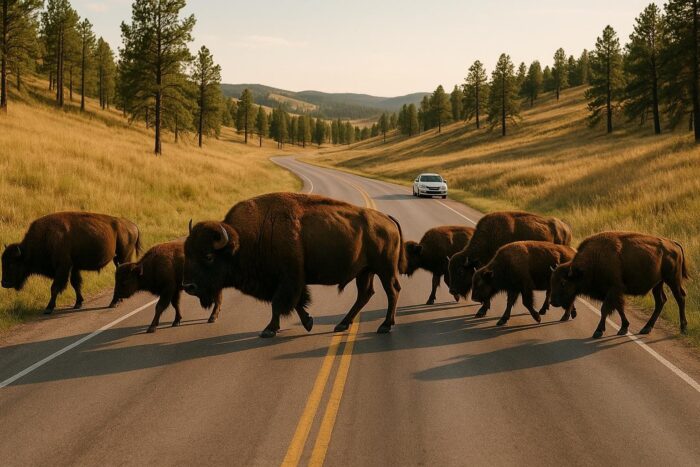
- Black Hills loop: Mount Rushmore, Custer State Park and Badlands National Park in South Dakota. Wildlife, caves and wide-open views.
- Coast and redwoods: the Northern California and Oregon coast on US 101, with the Avenue of the Giants through Humboldt Redwoods State Park. Big trees are an instant hit with kids.
If you want to see how these family routes compare with the headline drives, a ranking of the country’s classic scenic routes covers the big names and how long each one takes.
Tips that make the miles easier
- Pack a car kit: wipes, a change of clothes, a small trash bag, motion sickness remedies if your child needs them.
- Front-load the fun: put an exciting stop early on long days so the reward is not always “later.”
- Screen-free games first: license plate spotting and I Spy work surprisingly well, and they keep eyes out the window.
- Book lodging with a pool: it gives kids something to look forward to at the end of the drive.
- Keep one flexible day: sick kids, bad weather or a great discovery all need room in the schedule.
- Check car seat rules: requirements vary by state, and rental companies may charge extra for seats.
Food and breaks on the road
Hungry kids turn a pleasant drive into a tense one quickly. Keep a cooler or a snack bag within reach, with water, fruit and something crunchy. Plan lunch as a real stop at a park or picnic area rather than eating in the car, so everyone can stretch and run. Rest areas on interstates are handy, but a town park with a playground is a far better break for young children.
Family road trip FAQ
What is a good first road trip with kids?
A two- or three-day loop close to home with one clear highlight, like a beach or a national park, and no driving day over four hours.
How often should we stop with young children?
About every two hours is a common rule of thumb, more often with toddlers. Plan stops at parks or playgrounds so kids can run.
Are national parks good for family road trips?
Yes. Many have short trails, visitor centers and free Junior Ranger programs designed for kids.
What is the best age for a long road trip?
Many families find trips easier once kids are out of naps and can enjoy audiobooks and games, often from around age five. But short, well-paced trips work at any age.