
The advertised daily rate is only the starting point. A cheap car rental for a USA road trip is the one with the lowest total cost once you add taxes, location fees, a possible one-way charge, insurance, tolls and fuel. Two quotes that look identical at first can end up far apart at the counter.
This guide explains where the extra costs hide, how to keep them down and what to check before you drive off the lot.
Where the real cost of a rental comes from
| Cost | What it is | How to reduce it |
|---|---|---|
| Base rate | The daily or weekly price of the car | Book early, compare, and recheck the price later if your booking is cancellable |
| Taxes and location fees | Airport concession recovery fees, customer facility charges, tourism fees, vehicle license fees | Compare airport and off-airport pickup |
| One-way fee | A charge for returning the car to a different location | Plan a loop, or compare the direction of travel |
| Young renter fee | A daily surcharge for drivers under 25 | Check waivers linked to memberships |
| Insurance and waivers | Collision damage waiver, liability and other options sold at the counter | Check your own coverage first |
| Tolls | Toll programs with daily fees on top of the tolls | Understand how tolls work on your route |
| Fuel | Prepaid fuel or refueling charges on return | Return the car with the agreed fuel level |
Fees and taxes can add a large share to the base rate, especially at airports, so always compare the final total, not the headline price.
Book smart: timing, location and car size
Book early, then keep checking
Prices move with demand. Reserving early gives you a price to fall back on; if the booking can be cancelled for free, checking again closer to the date lets you rebook if the rate drops.
Compare airport and city locations
Airport branches are convenient but carry fees that city locations often avoid. If you land in a city where you will spend a day or two without a car, picking the car up in town on the day you leave can save both fees and rental days.
Choose the car you need, not a bigger one
For paved scenic roads, a compact or midsize car is enough and uses less fuel. Check the trunk size against your luggage, and confirm the rental includes unlimited mileage: on a long road trip, a mileage cap can become expensive quickly.

One-way rentals: the biggest trap
Linear routes like the Pacific Coast Highway are tempting, but returning the car in another city can add a significant one-way fee. The amount varies by company, route, season and even direction of travel. Before committing to a one-way itinerary, price the same dates as a loop and as a one-way trip in both directions. When the gap is large, a loop route or a short backtrack often costs less than the fee.
Your route choice and your rental cost are linked, which is why the car belongs early in our road trip planning guide, right after choosing the itinerary.
Age rules and young driver fees
Age requirements vary by company and state. Most rental companies set a minimum age and charge young drivers extra, usually until 25, and the surcharge can add up quickly on a long trip. Check the rules in your pickup state before you book, and ask whether a membership or a card you already hold reduces or waives the young driver fee.
Insurance: what you may already have
Counter insurance is where many travelers overpay, and also where some are underinsured. Before you pick up the car, check three things:
- Your personal auto policy: many U.S. policies extend some coverage to rental cars. Call your insurer to confirm what applies and what deductible you would pay.
- Your credit card: many cards include rental car damage coverage when you pay with them and decline the collision damage waiver. It is often secondary to your own insurance and usually does not include liability. Read your card’s terms.
- Liability: if you have no U.S. auto policy, as is the case for most international visitors, liability coverage deserves particular attention, whether through the rental company or a travel package that includes it.
Buy what fills a real gap, and skip what duplicates coverage you already have.
Tolls, fuel and other surprises
- Toll programs: rental cars often come with a transponder or plate-reading system. Using it can trigger a daily service fee on top of the tolls, and the charges can reach your card weeks after the trip. Check how the program is billed and whether your route has tolls at all.
- Fuel: prepaying for a full tank only pays off if you return the car nearly empty. Otherwise, refuel shortly before the return.
- Unpaved roads: many rental agreements restrict driving on unpaved roads. Read the terms before planning a gravel detour.
- Additional drivers: an extra driver may cost more per day. Some companies waive it for a spouse or partner, so ask.
Inspect the car before you leave
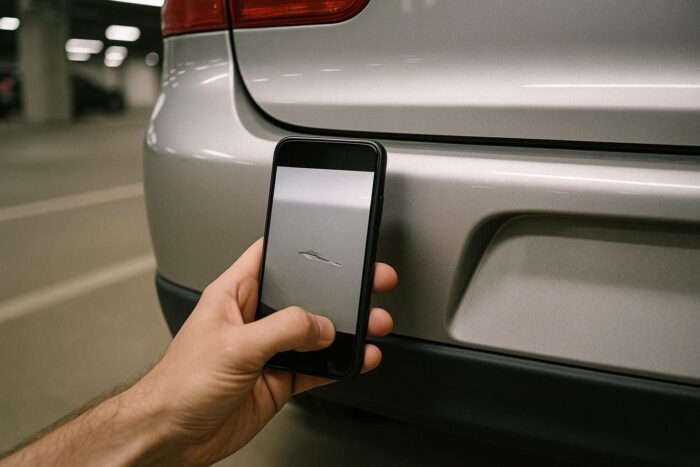
Walk around the car with your phone and take photos and a short video of every scratch and dent, the windshield, the wheels, the fuel gauge and the odometer. Make sure any damage is noted on the rental agreement. Do the same at return, ideally with an agent present.
With the car sorted, the fun part begins: choosing the road. Our overview of the drives that deserve a spot on your map will help you decide where to point it.
FAQ: cheap car rentals for road trips
Is it cheaper to rent a car at the airport or in the city?
City locations often avoid some airport fees. Compare the total price, including the cost of getting to the branch.
How can I avoid a one-way rental fee?
Plan a loop that returns to your starting point, or compare prices in both directions and between nearby cities.
Do I need the rental company’s insurance?
Not always. Check your personal auto policy and your credit card first, and pay particular attention to liability coverage.
Can I rent a car under 21 in the USA?
In Michigan and New York, the minimum age is 18 at major companies. Elsewhere, the minimum is usually 20 or 21, with a young renter fee under 25.