There are nine national parks in California, more than in any other state. They range from desert basins below sea level to granite valleys, giant sequoia groves, volcanic peaks, coastal redwood forests and a chain of islands you can only reach by boat. Together they make California the best state in the country for a national park road trip.
The catch is distance and timing. The parks are spread over the whole length of the state, and the right season for one can be the wrong season for its neighbor. Here is where each park is, when to go, and how to combine them by car.
The 9 national parks in California at a glance
| Park | Region | Established | Best season |
|---|---|---|---|
| Yosemite | Central Sierra Nevada | 1890 | Late spring to early fall |
| Sequoia | Southern Sierra Nevada | 1890 | Late spring to fall |
| Kings Canyon | Southern Sierra Nevada | 1940 | Late spring to fall |
| Lassen Volcanic | Northern California | 1916 | Summer to early fall |
| Redwood | North coast, near Oregon | 1968 | Year-round |
| Channel Islands | Off the coast near Ventura | 1980 | Year-round |
| Death Valley | Mojave Desert, partly in Nevada | 1994 | November to March |
| Joshua Tree | Southern California desert | 1994 | Fall to spring |
| Pinnacles | Central Coast ranges | 2013 | Fall to spring |
Death Valley and Joshua Tree were national monuments long before 1994, and Pinnacles only became the newest national park in the state in January 2013.
Where they are, region by region
The Sierra Nevada parks
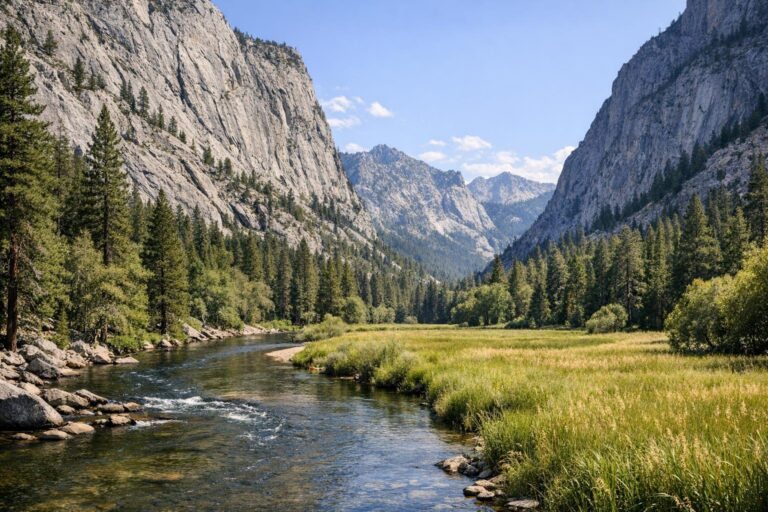
The three mountain parks sit in a line along the Sierra. Yosemite is the famous one, with El Capitan, Half Dome and the big spring waterfalls. Sequoia and Kings Canyon, managed together farther south, protect the largest trees on Earth and one of the deepest canyons in the country. All three have high roads that close in winter, so they work best from late May to October.
Northern California
Redwood National and State Parks line US-101 near the Oregon border, with the tallest trees in the world growing right down to the coast. Lassen Volcanic, inland, has steaming hydrothermal areas and a volcano you can hike. Snow limits vehicle access to Lassen for much of the year, so it is a summer park.
Central and Southern California
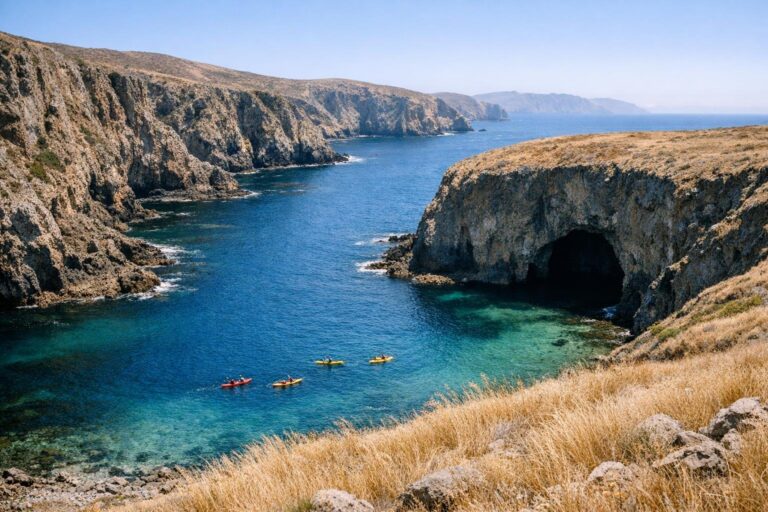
Pinnacles, in the hills east of Salinas, is known for its rock spires, talus caves and California condors. It has two entrances with no road between them, so pick the east side (via CA-25) or the west side (via Soledad). Channel Islands is the odd one out: five islands off Ventura and Santa Barbara, reached only by boat, with no entrance fee.
The desert parks
Joshua Tree and Death Valley are winter destinations. Joshua Tree, two to three hours east of Los Angeles, mixes boulder piles and its namesake trees. Death Valley is the largest national park outside Alaska and the hottest place in North America, which makes summer visits a serious matter. From November to March, both are at their best.
Which California national park for each season
- Winter: Death Valley, Joshua Tree, Pinnacles and Channel Islands (gray whales pass from December through April). Yosemite Valley stays open and is beautiful under snow, but carry chains.
- Spring: Yosemite for the waterfalls, Pinnacles before the heat, the deserts for wildflowers in a good year.
- Summer: the Sierra high country (Tioga Road, Kings Canyon’s Cedar Grove), Lassen and Redwood. Skip the desert parks.
- Fall: almost everything works. September and October are the best months for a long multi-park loop.
How to link several parks on one road trip
California’s size is the main constraint. Rather than trying to see all nine, choose a cluster.
The Sierra loop (5 to 7 days)
Start in the Bay Area, spend two or three days in Yosemite, then drive south via Fresno to Kings Canyon and Sequoia, about three and a half hours from Yosemite Valley to the Big Stump entrance. Add Pinnacles on the way back to the coast. In summer, you can instead cross the Sierra on the Tioga Road and head south along US-395.
The desert loop (4 to 6 days, fall to spring)
From Los Angeles, drive to Joshua Tree, then north through the Mojave to Death Valley. Fuel up whenever you can: distances are long and services sparse. Las Vegas makes an easy start or end point.
The coast route (7 to 10 days)
Follow the coast from Ventura, with a boat day on the Channel Islands, up to the Central Coast for Pinnacles, then north to the redwoods. Lassen fits as a detour inland on the way back in summer.
For the big picture, including parks beyond California, our overview of which US parks deserve a spot on your road trip groups them by region and season.
Passes and fees
Yosemite, Sequoia and Kings Canyon each charge $35 per vehicle. Since 2026, those three also add a $100 fee for each non-US resident aged 16 and older, waived for annual pass holders. If you visit three or more fee parks, the America the Beautiful pass ($80 for US residents, $250 for non-residents) is the simplest choice.
California national parks FAQ
How many national parks are in California?
Nine, the most of any state: Yosemite, Sequoia, Kings Canyon, Lassen Volcanic, Redwood, Channel Islands, Death Valley, Joshua Tree and Pinnacles.
Which California national park is the best?
Yosemite is the classic first choice. For winter trips, Death Valley and Joshua Tree are better picks.
What is the newest national park in California?
Pinnacles, established in January 2013.
Can you visit all nine in one trip?
It is possible in about three weeks, but the seasons rarely line up: the deserts are too hot in summer and the mountain roads are snowbound in winter. Two shorter trips work better.