Yosemite National Park sits in the central Sierra Nevada of California, about four hours by car from San Francisco and roughly six from Los Angeles. It covers close to 1,200 square miles, but most road trippers spend their time in a handful of places: Yosemite Valley, Glacier Point, the Tioga Road high country and the giant sequoias of Mariposa Grove.
The good news for 2026: the park has dropped its timed entry reservation system, so you can drive in without booking a slot. This guide covers how to get there, which entrance to use, the two big scenic roads, El Capitan and the waterfalls, the weather season by season, and how many days you really need.
Where is Yosemite National Park?
Yosemite lies on the western slope of the Sierra Nevada, east of the Central Valley towns of Merced and Fresno. It was set aside as a national park on October 1, 1890, and it is one of the busiest parks in the country: the National Park Service counted about 4.28 million visits in 2025.
The park is big and the roads are slow, so think of it as a set of distinct areas rather than one destination:
- Yosemite Valley: the famous seven-mile glacial valley with El Capitan, Half Dome and Yosemite Falls. Most lodging, shuttles and services are here.
- Glacier Point and Wawona: the southern part of the park, with the best overlook of the Valley and Mariposa Grove of giant sequoias.
- Tuolumne Meadows and the Tioga Road: the high country, open only in summer and early fall.
- Hetch Hetchy: a quieter reservoir valley in the northwest corner.
Yosemite is a regular on any list of the best national parks in the USA, and if you are deciding where it fits in a bigger trip, our roundup of the best national parks in the USA shows how it compares with the other big Western parks.
Entrances and how to drive in
Four highways lead into the park, and the one you pick depends on where you start.
| Entrance | Highway | Best for | Season |
|---|---|---|---|
| Big Oak Flat | CA-120 (west) | San Francisco Bay Area, about 195 miles | Year-round, chains possible in winter |
| Arch Rock | CA-140 | Merced; the lowest, gentlest route into the Valley | Year-round |
| South Entrance | CA-41 | Fresno (about 94 miles) and Los Angeles; closest to Mariposa Grove | Year-round, chains possible in winter |
| Tioga Pass | CA-120 (east) | Lee Vining, Mammoth Lakes and the Eastern Sierra | Summer and early fall only |
Hetch Hetchy has its own road off CA-120, just outside the Big Oak Flat entrance. Once inside, driving from one area to another takes longer than the map suggests: Glacier Point, for example, is 30 miles and about an hour from the Valley.
Entrance fees in 2026
The standard private vehicle fee is $35 and covers everyone in the car for seven days. Motorcycles pay $30, and visitors on foot or by bike pay $20 per person (15 and under are free). A Yosemite annual pass costs $70, and the America the Beautiful pass, $80 for US residents, covers every national park.
New in 2026, non-US residents aged 16 and older pay an extra $100 per person at Yosemite, on top of the entrance fee. That surcharge is waived for anyone traveling with an annual pass, including the $250 non-resident America the Beautiful pass, which pays for itself quickly on a multi-park trip.
Do you need a reservation?
Not in 2026. After several years of timed entry permits on summer days, the park announced in early 2026 that it would no longer use a reservation system to drive in. Instead, it manages crowds with active parking management in Yosemite Valley and advises visiting on weekdays. In practice, that means arriving early: Valley parking lots can fill early on busy summer days. Campgrounds and in-park lodging still need to be booked separately, often months ahead.
The two great drives: Tioga Road and Glacier Point Road
Tioga Road
Tioga Road (the park section of CA-120) is the only road across the Sierra in the park and one of the finest high-mountain drives in the West. It climbs from the Crane Flat area past Olmsted Point, with its view of the back side of Half Dome, along the shore of Tenaya Lake and through Tuolumne Meadows before topping out at Tioga Pass and dropping to Lee Vining.
It closes every winter. Plowing usually starts around April 15 and takes one to two months, so the road typically opens sometime between late May and late June, depending on snowpack. The park is clear that no one can predict the exact date. It closes again with the first serious storms of fall: on October 21, 2026, the park announced a temporary closure ahead of forecast snow. If you are crossing the Sierra in spring or fall, have a backup route.
Glacier Point Road
Glacier Point Road branches off Wawona Road and runs to an overlook 3,214 feet above the Valley floor, with Half Dome, Yosemite Falls and the high country spread out in front of you. It is open to cars from roughly late May through October or November. In winter the road is plowed only as far as the Badger Pass ski area, and the last 10.5 miles become a groomed cross-country ski route. Plan for sunset here if you can: the light on Half Dome is the reason most people make the drive.
El Capitan and the Valley highlights
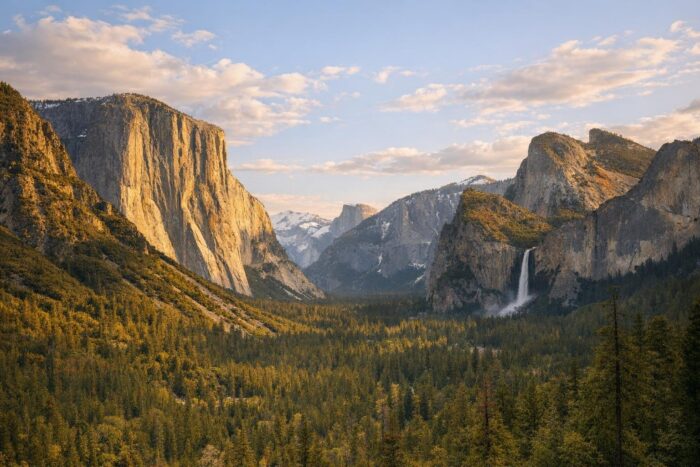
El Capitan rises about 3,000 feet from base to summit on its tallest face, a single sweep of granite that climbers spend days ascending. You get a great view from El Capitan Meadow on the Valley loop road, where you can often spot climbers with binoculars, and from Tunnel View on Wawona Road, the classic panorama with El Capitan on the left, Bridalveil Fall on the right and Half Dome in the distance.
A first loop of the Valley usually includes:
- Tunnel View, right at the end of the Wawona Tunnel.
- Lower Yosemite Fall, an easy walk from the Valley shuttle stops.
- Bridalveil Fall, 620 feet, flowing all year.
- Cook’s Meadow and Sentinel Bridge, for Half Dome reflections in the Merced River.
- The Mist Trail to Vernal Fall (317 feet) and Nevada Fall (594 feet), the best half-day hike if you have the legs for it.
When the waterfalls run
Yosemite Falls drops 2,425 feet in three sections, one of the tallest waterfalls in North America. It usually flows from about November through July and peaks in May. Peak runoff across the park comes in May or June; by August, Yosemite Falls is often a trickle or completely dry. Horsetail Fall, the one that glows orange at sunset in February, only runs from about December through April. If waterfalls are the point of your trip, go in spring.
Yosemite National Park weather by season
- Spring (April to June): waterfalls at full power, mild Valley days, snow still in the high country. Tioga and Glacier Point roads may still be closed early in the season.
- Summer (July to August): warm to hot in the Valley, pleasant at Tuolumne Meadows. Every road is open, crowds peak and wildfire smoke can affect views some years.
- Fall (September to October): fewer people, cool nights, low waterfalls. The first snow can close the high roads at any time from October.
- Winter (November to March): quiet, often snowy Valley, Badger Pass open for skiing. Tire chains may be required on park roads from about October through April, so carry them.
How many days do you need in Yosemite?
One day is enough for the Valley loop and Tunnel View, but it feels rushed. Two days lets you add Glacier Point at sunset and one good hike. Three days is the sweet spot for a road trip: Valley on day one, Glacier Point and Mariposa Grove on day two, then the Tioga Road high country on day three, ideally continuing east over the pass toward the Eastern Sierra in summer.
If you are linking Yosemite to the giant sequoia parks to the south, the drive via Fresno to the Kings Canyon entrance takes about three and a half hours, which fits comfortably into a California loop.
Yosemite National Park FAQ
Is Yosemite open all year?
Yes. Yosemite Valley, Wawona and the main roads from the west stay open year-round, though chains may be required after storms. Tioga Road and Glacier Point Road close in winter.
Do I need a reservation to visit Yosemite in 2026?
No entry reservation is needed in 2026. You only pay the entrance fee at the gate. Campgrounds, lodging and some permits, such as the Half Dome cables, are booked separately.
What is the best month to visit Yosemite?
May and June bring the biggest waterfalls, while September is a good balance of open roads and smaller crowds. Avoid summer weekends if you can.
How far is Yosemite from San Francisco?
About 195 miles via CA-120, which takes four to five hours depending on traffic and the route into the Valley.