Glacier National Park, in northwest Montana, is built around one road. Going-to-the-Sun Road climbs 50 miles across the Continental Divide, and its short alpine season decides when most people visit, where they hike and how they plan the rest of their trip.
Here is what to know before you go: how the road works, what changed for access in 2026, what the weather does month by month, which hikes start from the road, and how to link Glacier with Yellowstone.
Glacier National Park, Montana at a glance
Established on May 11, 1910, Glacier covers 1,013,322 acres along the Canadian border. It meets Waterton Lakes National Park in Alberta, and in 1932 the two became the world’s first International Peace Park. They share UNESCO World Heritage status, granted in 1995. The park recorded 3,136,557 visits in 2025.
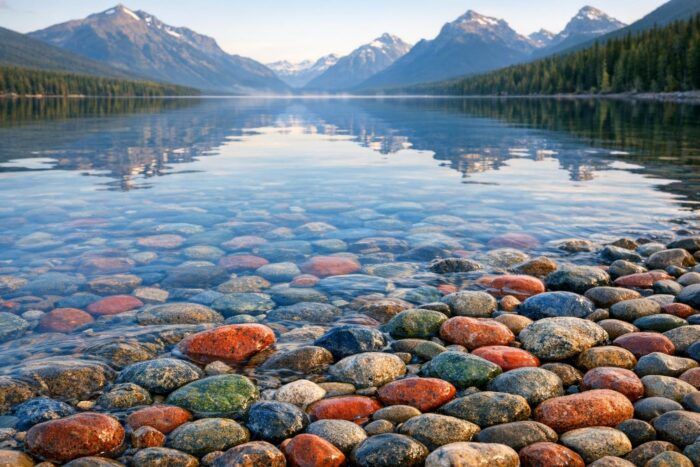
The name comes from the ice that carved its valleys. Around 150 glaciers larger than 25 acres existed in the mid-19th century; by 2010 only 25 active glaciers remained, and they keep shrinking. What you will see today are steep cirques, hanging valleys and turquoise lakes colored by glacial silt.
Going-to-the-Sun Road: the essentials
Built between 1921 and 1932 and dedicated in 1933, Going-to-the-Sun Road is a National Historic Landmark. It runs from Lake McDonald on the west side to St. Mary Lake on the east, topping out at Logan Pass, 6,646 feet above sea level.
| Detail | What to expect |
|---|---|
| Length | 50 miles |
| Driving time without stops | About 2 hours |
| Highest point | Logan Pass, 6,646 ft |
| Vehicle limits | No vehicles over 21 ft long or 8 ft wide (mirrors included) between Avalanche Creek and Rising Sun |
| Height warning | Vehicles over 10 ft may hit rock overhangs heading west from Logan Pass to the Loop |
If you are traveling in a large RV, park it in the valley and use the shuttle or a smaller car for the crossing.
When the road is open
The lower sections near Lake McDonald and St. Mary stay open all year. The alpine section depends on snow and plowing, so there is no fixed opening date. According to the park, the road is typically fully open by early July and stays open until the third Monday of October, weather permitting. In heavy snow years it opens later: the record is July 13, 2022.
Reservations and Logan Pass rules in 2026
Glacier did not require vehicle reservations in 2026, a change from previous summers. That applied to Going-to-the-Sun Road and to Many Glacier, Two Medicine and the North Fork.
Instead, the park piloted two new measures at Logan Pass from July 1 to Labor Day (September 7, 2026): a three-hour limit for private vehicle parking and a ticketed-only shuttle. Shuttle tickets were sold through Recreation.gov, with boarding at Apgar, Lake McDonald Lodge, St. Mary and Rising Sun. Hikers planning long routes from Logan Pass, such as the Highline Trail, needed a shuttle ticket. After September 8, parking returned to first come, first served until the alpine section closed for winter.
Rules have changed almost every year, so check the park’s announcements for 2027 before you book anything.
Hikes you can start from the road
- Trail of the Cedars and Avalanche Lake: starts at Avalanche Creek on the west side. The lake is fed by waterfalls and colored turquoise by silt.
- Hidden Lake Overlook: leaves from the Logan Pass Visitor Center across alpine meadows where mountain goats, the park’s symbol, are often seen.
- Highline Trail: also from Logan Pass, it follows the Garden Wall above the road. It is long and exposed, best for experienced hikers.
Many Glacier, in the northeast corner, deserves its own day. It is reached by a separate road from the east side, not by Going-to-the-Sun Road.
Glacier National Park weather, month by month
These are average daily highs and lows at West Glacier, at the park’s west entrance (1991 to 2020 normals). Logan Pass is far colder and can see snow in any month.
| Month | Avg high (°F) | Avg low (°F) |
|---|---|---|
| January | 30 | 19 |
| February | 34 | 19 |
| March | 43 | 25 |
| April | 53 | 31 |
| May | 64 | 39 |
| June | 70 | 45 |
| July | 80 | 50 |
| August | 79 | 48 |
| September | 68 | 41 |
| October | 52 | 33 |
| November | 37 | 26 |
| December | 29 | 20 |
July and August are the warmest and the only months when the full road is reliably open. Late June can still be wintry up high, and September brings cool nights, fewer people and the first fall color. West Glacier gets around 115 inches of snow a year, which is why the alpine road takes so long to clear.
Linking Glacier with Yellowstone
Glacier and Yellowstone are a classic northern Rockies pairing. From the east side of Glacier, US-89 runs south through Montana all the way to Gardiner, the gateway to the North Entrance of yellowstone national park. It is a full day of driving, so many travelers break it up with a night in central Montana.
A loop of ten days to two weeks lets you spend three days in Glacier, four in Yellowstone and two in Grand Teton just to the south. If you are deciding which parks deserve your limited vacation days, our roundup of the parks most worth planning a trip around ranks the options by region and season.
Glacier National Park FAQ
Do you need a reservation for Glacier National Park?
Not in 2026: vehicle reservations were dropped. A ticketed shuttle and three-hour parking limit applied at Logan Pass from July 1 to September 7, 2026. Check the park’s site for 2027 rules.
When does Going-to-the-Sun Road open?
The alpine section usually opens fully by early July and closes around the third Monday of October. Snow can push either date.
How long does it take to drive Going-to-the-Sun Road?
About two hours for the 50 miles without stopping. With viewpoints and a short hike, plan a full day.
What is the best month to visit Glacier?
July and August for full road access and warm days, early September for fewer crowds.