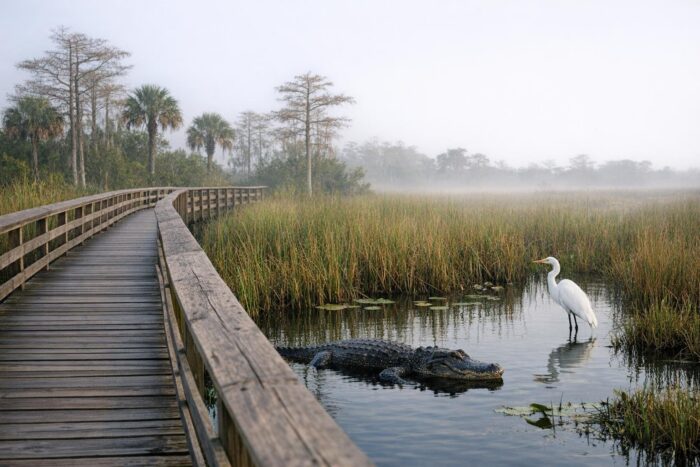
Everglades National Park protects the largest subtropical wilderness in the United States, a vast river of sawgrass that drains slowly toward Florida Bay. It sits less than an hour from Miami, yet it feels like another world: alligators sunning beside the trail, herons stalking the shallows and a horizon with nothing on it but grass and sky.
It is also an easy park to get wrong. The entrances are not connected, the seasons are reversed compared with most parks, and summer mosquitoes can end a visit early. Here is how to plan an Everglades road trip that works.
Everglades National Park entrances: which one to choose
The park has three entrances, and the National Park Service stresses that they are not connected: each one, and the Flamingo area deep in the south, is at least an hour’s drive from the others. Choose based on what you want to see and how much time you have.
| Entrance | Location | Best for | Time to allow |
|---|---|---|---|
| Homestead (Ernest F. Coe Visitor Center) | South of Miami, via Florida City | The Main Park Road, Anhinga Trail, Flamingo | A full day |
| Shark Valley | On US-41 (Tamiami Trail), west of Miami | Alligators, the tram or bike loop, the observation tower | Half a day |
| Gulf Coast (Everglades City) | Near the Gulf of Mexico, closer to Naples | Boat tours of the Ten Thousand Islands, paddling | Half a day |
Shark Valley: the 15-mile loop
Shark Valley is the classic first taste of the Everglades. From Florida’s Turnpike, you drive 25 miles west on US-41, the Tamiami Trail, to the entrance. Beyond the parking lot, cars are not allowed: a paved 15-mile loop heads into the sawgrass, and you cover it on a narrated tram tour, by bike or on foot for a short out-and-back.
Halfway around the loop, an observation tower gives the wide view over the “river of grass”. Alligators often lie right beside the pavement, especially in the dry months, so keep your distance and never feed them.
Shark Valley’s parking lot is small. In peak season it usually fills by 10 a.m., after which cars are only let in as others leave. Arrive early or come on a weekday. If you take the tram, the park advises arriving one and a half to two hours before your scheduled tour.
The Main Park Road from Homestead to Flamingo
The main entrance near Homestead opens onto the Main Park Road, which runs 38 miles south to Flamingo on Florida Bay. Speed limits are 45 to 55 mph and pullouts are narrow, so allow a full day for the round trip with stops. Highlights along the way:
- Royal Palm and the Anhinga Trail: a short boardwalk just past the entrance and one of the best wildlife walks in the national park system, with alligators, turtles, anhingas and herons at close range in winter.
- Pa-hay-okee Overlook: a raised platform over the open sawgrass prairie.
- Mahogany Hammock: a boardwalk through a tropical hardwood island.
- Flamingo: the end of the road, with a visitor center and marina where you may spot manatees and American crocodiles, which share South Florida’s waters with alligators.
There is no public transportation inside the park, so a car is essential. A seasonal trolley runs from Homestead to the visitor center and Royal Palm, roughly December through April.
Wildlife you can expect to see
Wildlife is the reason to come. In the dry season, water levels drop and animals concentrate around the remaining ponds and canals, which makes them easy to see from trails and boardwalks.
- Alligators: almost guaranteed at Shark Valley and the Anhinga Trail in winter.
- Wading birds: great blue herons, egrets, wood storks, roseate spoonbills and ibises.
- Anhingas and cormorants: often seen drying their wings in the sun.
- Crocodiles and manatees: mostly around Flamingo and the coastal waters.
- Florida panthers: present but very rarely seen.
Best time to visit: the dry season and the mosquito problem
The Everglades has two seasons. The dry season, roughly December through April, is the time to go: mild temperatures, low humidity, fewer mosquitoes and the best wildlife viewing. It is also the busy season, so expect congestion at Homestead and Shark Valley on winter weekends.
The wet season, from about May to November, brings heat, daily thunderstorms and clouds of mosquitoes, especially around Flamingo and in the mangroves. The Atlantic hurricane season also runs from June to November. Summer visits are possible, but keep them short, cover up and carry strong repellent.
Everglades fees in 2026
Entrance passes are valid for seven consecutive days at all entrances. The park does not accept cash: pay by card at the gate or buy a digital pass in advance.
- Private vehicle: $35 for the vehicle and its passengers.
- Motorcycle: $30.
- Per person (on foot or bike): $20.
- Everglades annual pass: $70, for U.S. citizens and residents.
Since 2026, visitors aged 16 and over who are not U.S. residents pay an additional $100 per person at the Everglades, unless they enter with an annual or America the Beautiful pass. Children 15 and under enter free.
An Everglades road trip from Miami
Because the entrances are separate, the smartest plan is to spread the park over two days from a base in Miami, Homestead or Florida City:
- Day 1: leave early for Shark Valley, ride or take the tram around the loop, then continue west on the Tamiami Trail toward Everglades City for a boat tour of the mangrove islands.
- Day 2: drive the Main Park Road from Homestead, walk the Anhinga Trail early, stop at the overlooks and spend the afternoon at Flamingo.
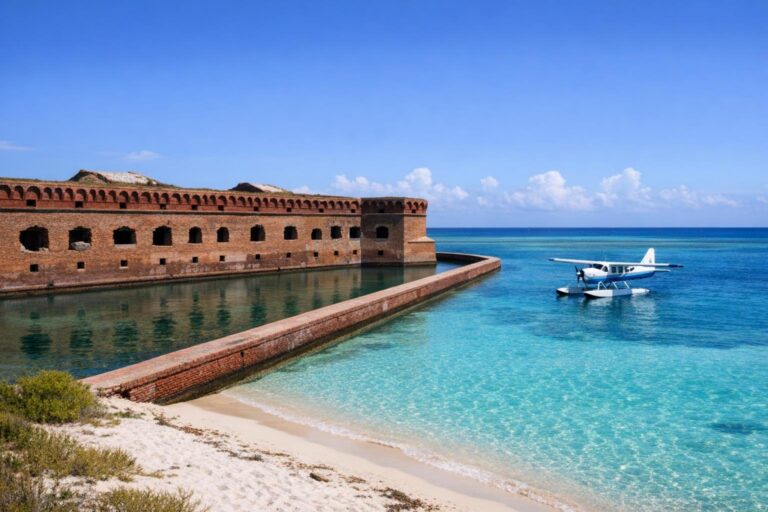
The Everglades also holds a place in our ranking of the national parks most worth the drive, as one of the standouts in the East. South Florida has three national parks within reach: Biscayne, a mostly underwater park just east of Homestead, and Dry Tortugas, at the far end of the Florida Keys and reached by boat or seaplane from Key West. A week is enough to link all three with a drive down the Overseas Highway.
Practical tips: fill up and buy food before you enter, carry plenty of water, and arrange your return in advance if you rely on ride services, since they may not pick up from the park.
Everglades National Park FAQ
How far is Everglades National Park from Miami?
Shark Valley and the Homestead entrance are both within about an hour’s drive of central Miami, depending on traffic. Everglades City, on the Gulf Coast side, is farther.
Can you drive through the Everglades?
Not from one entrance to another. The Main Park Road from Homestead to Flamingo is the only long drive inside the park, and it is a dead end, so you return the same way.
Is one day enough for the Everglades?
One day lets you see one area well, Shark Valley or the Main Park Road. Two days lets you cover both without rushing.
Are airboat rides allowed in the park?
Airboat tours operate outside the main park areas, along the Tamiami Trail east of Shark Valley. Inside the park, the tram, bikes, boardwalks and canoes are the way to explore.