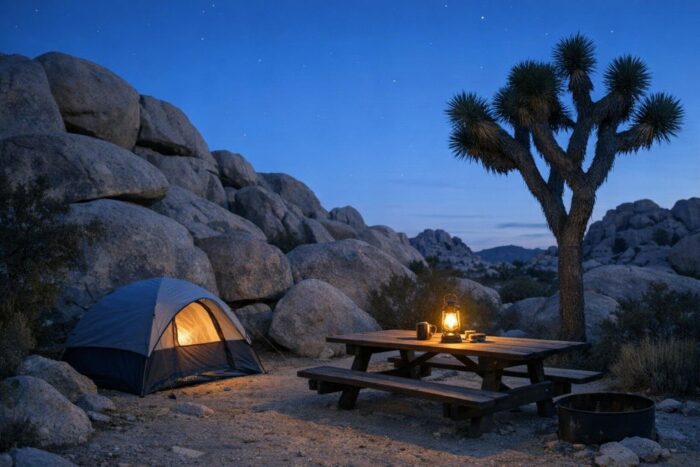
To camp in Joshua Tree National Park, you have nine campgrounds to choose from: six that take reservations and three run on a first-come, first-served basis. Sleeping inside the park is the easiest way to see the boulders at sunrise and the night sky without a drive back to town, but the rules are strict and the best months fill fast.
Below: the campgrounds side by side, how booking works, what changes with the seasons, and the rules that catch first-timers.
Joshua Tree campgrounds compared
| Campground | Sites | Booking | Water | Fee per night |
|---|---|---|---|---|
| Black Rock | 99 | Reservation | Yes, flush toilets, dump station | $35 |
| Cottonwood | 62 | Reservation | Yes, flush toilets, dump station | $35 |
| Indian Cove | 101 | Reservation | No, pit toilets | $35 |
| Jumbo Rocks | 124 | Reservation | No, pit toilets | $30 |
| Ryan (horse camp) | 31 | Reservation | No | $30 |
| Sheep Pass (groups) | 6 group sites | Reservation | No | From $55 |
| Hidden Valley | 44 | First-come | No | $25 |
| Belle | 18 | First-come | No | $25 |
| White Tank | 15 | First-come | No | $25 |
Prices and site counts come from the National Park Service campground page, checked in October 2026. Only Black Rock and Cottonwood have drinking water and a dump station (dump use costs $5). No campground has showers.
Which campground to pick
- Jumbo Rocks: the largest, set among the boulders in the heart of the park, close to Skull Rock. A great base for stargazing.
- Hidden Valley: small and central, popular with climbers, and open year-round. Its sites take vehicles up to 25 feet combined.
- Indian Cove: reached from the north side of the park, tucked against rock formations.
- Black Rock: near Yucca Valley, with water and flush toilets, the most comfortable option for RVs and families.
- Cottonwood: the southern option, close to the I-10 entrance and the Colorado Desert side.
Whichever you pick, check what the rest of Joshua Tree looks like around it, since the drive between the north and south sections of the park takes time.
Reservations and first-come sites
Reservation campgrounds are booked through Recreation.gov, the federal booking site. In the busy months of fall and spring, book as early as you can.
For Hidden Valley, Belle and White Tank, you claim a site in person. Arrive early, especially on weekends. A few rules apply: a site left empty for 24 hours is considered vacant, and you cannot hold a site for someone who is not there. Campground gates never close, so you can come and go at any hour.
RVs, groups and horse camps
RV drivers should check length limits before choosing. Hidden Valley and White Tank take vehicles up to 25 feet combined. Belle accepts up to 35 feet, though most of its sites fit 25 to 30 feet. Black Rock and Cottonwood, with water and dump stations, are the most practical for larger rigs.
Group sites hold 10 to 60 people. Those at Cottonwood and Sheep Pass are tents only, while Indian Cove allows small RVs or trailers up to 25 feet combined. Black Rock and Ryan have horse camps, which are reserved for campers with horses: book one without a horse and you forfeit the site.
Seasons and summer closures
Most campgrounds operate year-round, but several close or may close in summer: Ryan shuts in the summer months, and Belle and White Tank close temporarily. Hidden Valley stays open all year. In summer, expect daytime heat above 100°F and plan for shade and plenty of water.
Cooler months are the high season. The park limits camping to 30 nights per year, and only 14 of those nights can fall between October and May.
Rules to know before you go
- Capacity: first-come sites allow up to six people, three tents and two vehicles. Reservation sites vary; check the listing. A trailer counts as a second vehicle, and there is no overflow parking in the park.
- Campfires: only in the fire rings of designated sites. An annual fire ban runs from June 15 to October 1 unless alerts say otherwise.
- Generators: allowed only from 7 to 9 am, noon to 2 pm and 5 to 7 pm.
- Hammocks and lines: hammocks and slacklines are not allowed in campgrounds, and nothing may be tied to Joshua trees or other plants.
- Food: store food and trash in a secure container or your vehicle.
- Checkout: noon.
Sleeping outside a campground
Sleeping in a vehicle is only allowed in a lawfully occupied, designated campsite. Trailheads, dirt roads, parking lots and roadsides are off-limits for the night, and rangers enforce it.
Backcountry camping is possible for backpackers, but it follows its own permit rules, which you should read on the park website before planning. Campfires are never allowed in the backcountry. If all sites are taken, the fallback is a room or campground outside the park, then an early drive back in. Camping here is one of the best nights you can spend among America’s top parks for a road trip, so it pays to lock in a site early.
FAQ
Do you need a reservation to camp in Joshua Tree?
Not at Hidden Valley, Belle or White Tank, which are first-come, first-served. The other six campgrounds require a reservation.
Which Joshua Tree campgrounds have water?
Only Black Rock and Cottonwood. Bring all your water to the others.
Can you sleep in your car in Joshua Tree?
Only at a designated campsite you occupy legally, never at a trailhead or roadside.
Are campfires allowed?
Yes, in campground fire rings, except during the annual ban from June 15 to October 1.